
Retreat bookers are the most predictable enquirers we deal with, and we mean that as a compliment. Hen organisers ask about hot tubs; the person booking for a company asks the same four questions every time, because their job depends on the answers. Here they are, along with the one piece of economics most bookers miss.
The practical figures a company booker needs
For a work retreat the unglamorous facilities decide the day. Of the 33 houses live on this site on 4 September 2026, thirty state wifi on the listing, thirty-one have parking and twenty-nine a large dining space — which is usually the room you actually work in. Eighteen are set up for outside caterers or a private chef, the difference between a productive afternoon and an hour lost to lunch.
The four questions every retreat booker asks
- “Can you prove the wifi?” Not “is there wifi” — prove it. A speed-test screenshot from the house beats any listing description, and owners who can produce one win the booking. One person on a video call with a frozen face sinks the whole week’s credibility.
- “Is there breakout space?” A workshop needs the big table, but the real work happens when a few people can peel off to a snug, a garden room or the second sitting room. One large space is a conference; two or three spaces make a retreat.
- “Are the bedrooms ensuite?” Colleagues are not friends. Sharing a bathroom with your manager changes a retreat’s whole temperature, and the companies that come back every year book houses where nobody queues in a dressing gown.
- “Can we get a proper invoice?” Finance teams need a VAT invoice in the company name, not a screenshot of a bank transfer. Ask before you book, not after.
Why a house beats a conference centre in the first place
A conference centre gives you a room and a car park. A group house gives you a kitchen the team cooks breakfast in together, a garden for the conversation that never happens in a meeting room, and an evening that does not end when the venue closes at six. The work itself is not really the reason companies book a house over a hotel — it is everything around the work. Our group house versus hotel guide sets out the comparison in full if you need to make the case to finance.
The other advantage rarely gets said out loud: privacy. A hotel conference floor is shared with whoever else has booked the space that week, which means sensitive strategy conversations happen within earshot of strangers in the corridor. A private house removes that entirely – nobody outside the team hears anything, and there is no need to book a separate closed session for the parts of the agenda that should not be public.
Choosing a destination the whole team can reach
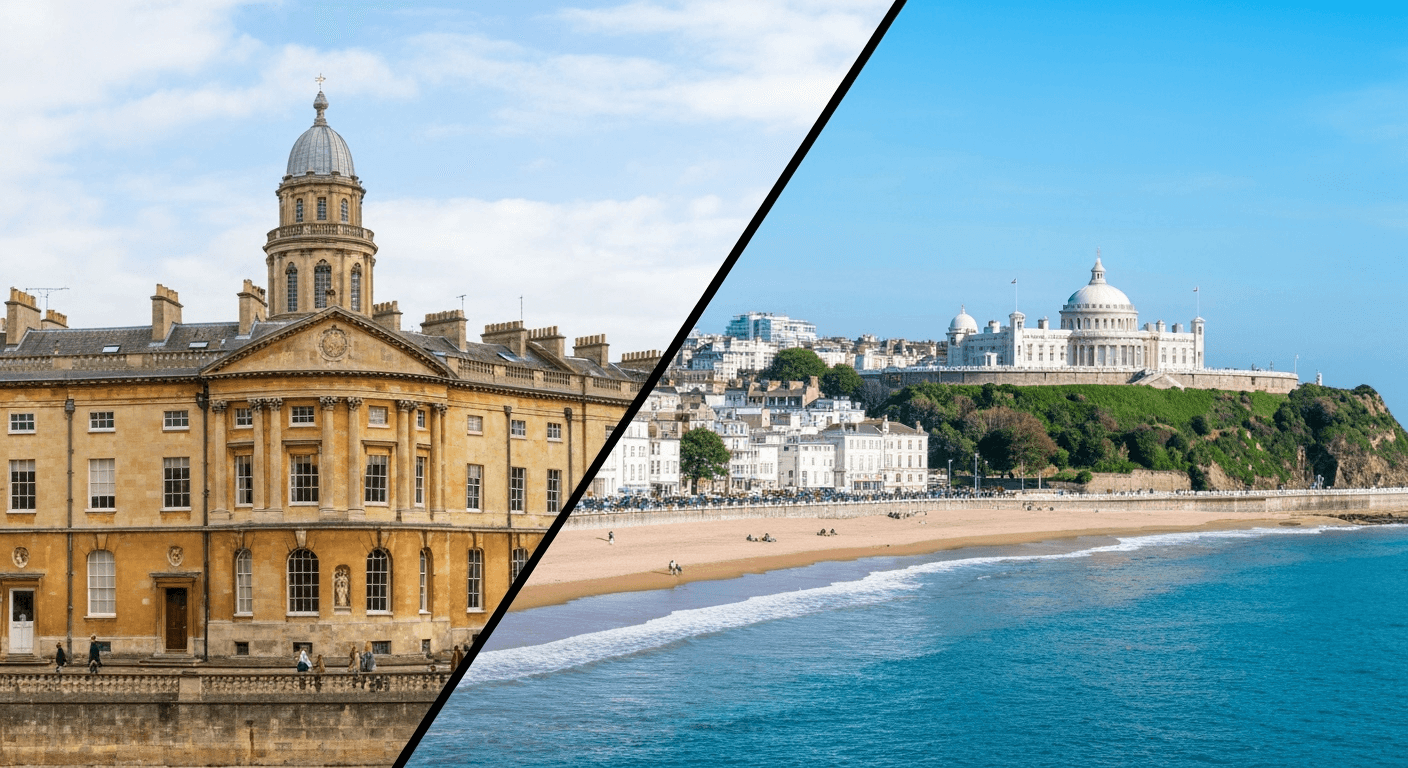
The Cotswolds works well for teams weighted towards London and the Midlands, with a good supply of larger houses suited to mixed work-and-downtime programming. The Lake District and Peak District both offer more dramatic scenery for a team that wants the retreat to feel like a genuine change of scene, and the Peak District in particular sits centrally enough to work for a team split between the North and the Midlands. Bath suits a retreat that wants an evening out beyond the house itself – good restaurants and an easy walk back. Whichever region you choose, work backwards from where your team actually lives before you fall for a photogenic property three trains away from half the office.
The midweek economics nobody uses
Here is the quiet advantage: retreats do not need weekends. A Tuesday-to-Thursday booking is worth asking about specifically, since midweek is exactly what the market leaves quietest — self-catering calendars have far more empty nights than full ones, overwhelmingly Sunday to Thursday, which means many of the houses fought over on Saturdays sit far emptier midweek. Rates and availability for midweek dates are set individually by each owner, so always get a quote rather than assuming a discount, but asking the question costs nothing and often opens up houses that would be booked solid at the weekend. Our midweek group stays guide covers how to approach the conversation with an owner.
Structuring the day: work time and downtime need separate spaces
The retreats that actually produce work rather than just a nice weekend away are the ones with a clear line between the two. Confirm the house has a room that can stay set up as a workspace all day – laptops open, whiteboard out – rather than one that has to be cleared for dinner every evening. Build in genuine unstructured time too: a walk, free time by the pool or garden, or simply an afternoon with no agenda. Teams that are scheduled solidly from breakfast to bedtime tend to arrive home more tired than they left, which rather defeats the point of the trip. Our retreat planning guide covers how to build a programme that balances both.
What to confirm with the owner before you book on the company's behalf
Beyond the four questions above, get the cancellation and deposit terms in writing before you commit budget, since these are set individually by each property owner and vary considerably. Ask whether the house can accommodate a delivery of equipment or catering supplies ahead of arrival, and confirm parking capacity if the team is driving separately rather than travelling together. Our questions to ask before booking a group house covers the wider list, and getting it answered before you book protects you from awkward surprises once the whole team has already committed the dates.
Booking direct versus going through a portal
Corporate bookers are used to procurement processes, but a group house booking usually moves faster and with fewer surprises when you deal with the owner directly rather than through a listing site alone. Direct contact means the four questions above get answered properly, in writing, by the person who actually knows the wifi speed and the room layout – rather than a generic listing description written months ago. Our guide to why organisers book direct covers the wider reasoning, and it applies just as much to a company booking as to a hen weekend.
One practical habit worth adopting: send the wifi question first, before dates or prices. The speed of the answer says a great deal about how the rest of the booking will go.
Our corporate retreat houses guide goes deep on choosing the venue, our corporate retreat houses collection is the place to start browsing properties, and the retreat planning guide above covers the programme itself — two different jobs, best kept apart.
How we counted
The figures above come from reading every one of the 33 houses live on Group Escape Houses on 4 September 2026 and recording what each owner states in their own listing. Where an owner has not stated something we count it as not stated rather than assuming it. It is a small sample and we say so plainly, but it is the exact set of houses you are choosing from here, counted on a stated date rather than described in round numbers.
Sources
- Group Escape Houses — our own count of every house live on this site on 4 September 2026
These are counts of live listings, not estimates or projections. We recount them when the inventory changes.
Frequently Asked Questions
What size of group house do I need for a corporate retreat?
How much does a corporate retreat in a UK group house cost?
What are the best destinations for a UK corporate retreat?
What should I look for in a corporate retreat house?
Is it cheaper to book a corporate retreat midweek rather than at the weekend?
Can a group house issue a proper VAT invoice for a corporate booking?
How do we structure a retreat so it actually produces work?
What should we confirm with the owner before booking a retreat for a company?
Share this post