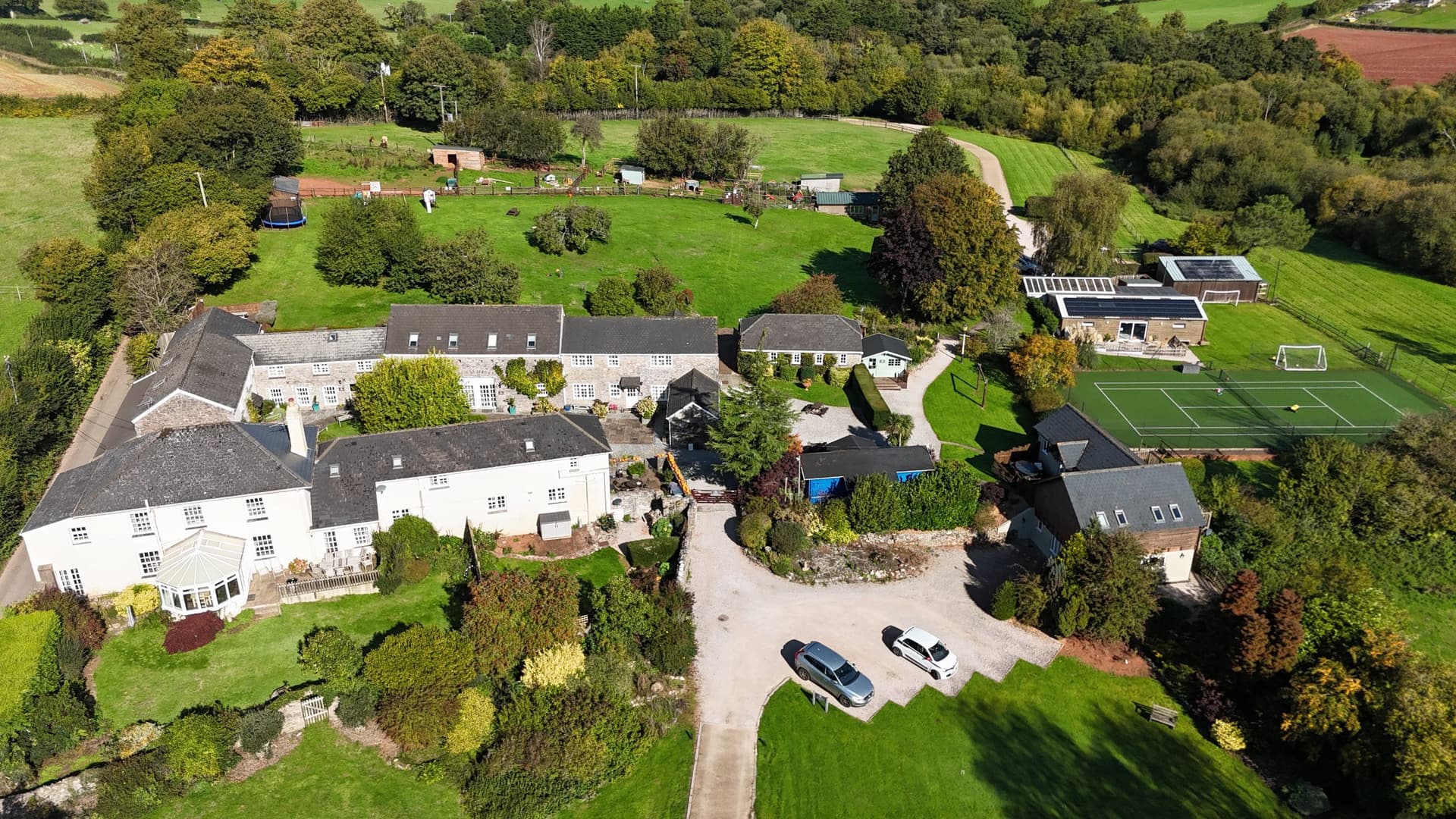

Feeding sixteen people is not cooking, it is logistics — and the groups who treat it that way eat better, spend less and argue far less. Every meal in a big house is a small catering operation whether you admit it or not: the shopping, the fridge space, the oven queue, the washing-up, and the quiet question of who is actually doing it. This guide is the operations manual, written from the organiser’s side of the kitchen.
Whether the house can actually feed everyone at once
Kitchens are the strongest feature on the site and the table is the weakest link. Of the 33 houses live on 4 September 2026, 27 have a large kitchen and 29 a large dining space, with 26 having both. But of the 23 houses that publish a dining capacity, only 15 seat everyone they sleep. Eight do not.
| Houses | |
|---|---|
| Large dining space | 29 |
| Large kitchen | 27 |
| Dishwasher | 27 |
| Suitable for outside caterers or a private chef | 18 |
| Barbecue | 23 |
Ask for the number of seats at the table, not the size of the room. A house that sleeps 20 and seats 14 splits your group at every meal, and that is the one thing a photograph will not tell you.
Check the kitchen spec before you book
Photographs lie about kitchens. They show the island and the pendant lights; they do not show capacity. Before you book, ask the owner for numbers rather than adjectives: how many ovens, how many hob rings, how much fridge and freezer space, and whether there is a dishwasher. A single oven and a family-sized fridge can make a lovely kitchen for four into a bottleneck for eighteen — the roast goes in, and nothing else can happen for two hours while everyone circles asking when.
Then check the things nobody thinks of until Saturday: are there enough plates, glasses, pans and serving dishes for your actual headcount, or enough for the house’s advertised sleeping number minus the ones that have been broken? Is there a second fridge or a utility room, which quietly transforms a group shop? And does the dining table seat everyone at once, rather than most of you plus an overflow table in the next room. Galtons Cottage in Dorset is a good example of a listing that states its kitchen specifics rather than leaving them to a photograph. Our questions to ask before booking a group house guide has this worded as a checklist you can paste into one email.
Work backwards from Saturday dinner
Plan the weekend’s food in reverse, starting with the one meal that matters. The Saturday dinner is the emotional anchor of a group stay: the meal the photographs come from, the one people describe afterwards, the reason the long table exists. Decide what that dinner is first — a chef, a big shared cook, a barbecue if the season is on your side — and let every other meal be designed to protect it. That means keeping the Saturday daytime light on cooking, making sure the oven is free when it needs to be, and not scheduling anything that leaves the cooks stressed at six o’clock. Our group house activities and entertainment guide explains how to place the day’s set-piece so it hands the group over to dinner rather than colliding with it.
The private chef question
A chef is worth pricing properly before you dismiss it as extravagant, because you are not comparing it against cooking — you are comparing it against a restaurant evening for the whole group, with drinks at restaurant prices, taxis both ways, and the diplomatic exercise of getting a table for eighteen on a Saturday night. The chef usually wins on the evening itself: nobody splits a bill, nobody leaves early for a lift, and the party never has to move.
What a chef costs, and what that cost includes, is set by the individual chef, so compare like with like. Ask for one written figure and confirm exactly what sits inside it: ingredients, travel, the number of courses, canapés or not, service during the meal, and whether they clear and wash up before they leave. Ask what they need from the kitchen, too — some want the run of it from mid-afternoon. Chefs travel to the house like the rest of our at-house experiences; the practicalities are set out on our private chef page. Then put the real quote into the group holiday budget planner alongside the alternative and let the numbers argue.
The shop and the rota
One big pre-arrival online delivery, timed for the check-in window, beats everyone-brings-something chaos every single time. The everyone-brings-something system reliably produces four bags of crisps, three bottles of gin and no milk. Build the list from the meal plan, add a generous margin on breakfast staples, and nominate one person to take the delivery so it is not sitting on a doorstep while the group is at the pub.
Then run a two-person-per-meal rota. Every meal has two named owners for cooking and two for clearing — ideally not the same pair — and everyone else is explicitly off duty and not allowed to feel guilty. Across a weekend this usually means each person works once and is on holiday the rest of the time, which is the entire point. Write the rota on paper and stick it to a cupboard door; a rota that lives in a WhatsApp thread has already failed.
Dietary requirements, handled like an adult
Collect requirements in writing at the point people confirm they are coming, and separate allergies from preferences when you ask. An allergy changes how food is stored, prepared and labelled; a preference changes the menu. Pass the complete list to any chef or caterer when you book rather than on the day, because a good one will design around it rather than making a substitution at the last minute. For self-catered meals, give one person ownership of the list, label containers once the shop arrives, and keep anything allergen-sensitive on its own shelf. Groups get this wrong not through carelessness but through diffusion — everybody assumed somebody else had it in hand.
What is included, and who decides
Catering language is slippery, and none of it is standardised. “Catering available” can mean a house that keeps a list of local chefs, a house with an in-house cook, or a house that simply does not mind you arranging one. Whether outside caterers are permitted at all, whether the kitchen can be handed over, whether there is any corkage on drinks you bring, and what state the kitchen must be left in at checkout are all decided by the individual owner or supplier. Ask each of them explicitly, get the answers in writing, and put the noise and checkout rules in front of the whole group rather than keeping them to yourself — our group house etiquette guide covers the wider version of leaving a kitchen the owner is glad to see.
Where group catering goes wrong
- No plan for the first night. Everyone arrives tired, hungry and at different times. Make Friday the easiest meal of the weekend — something that reheats, or a barbecue if the weather and the house allow.
- One hero cook. If one person cooks every meal, they have not had a holiday. The rota exists to prevent this, and organisers are the usual victims.
- Underestimating drinks logistics. Fridge space for food and fridge space for drinks compete. Ask whether there is a spare fridge, a cellar or an outbuilding.
- Leaving the money open. Settle the kitty rule before you travel, not on the last morning — our guide to splitting costs has the fair versions.
- Forgetting the last morning. Checkout usually includes the kitchen. Plan a breakfast that does not need the oven you are supposed to have cleaned.
The short version
Numbers from the owner, not photographs. The weekend planned backwards from one dinner. A real quote if you want a chef, with everything named inside it. One delivered shop, one written rota, two people per meal. Dietary requirements collected early and owned by somebody. And when you browse our houses, look past the kitchen island for the table that seats the whole group at once — more group holiday food ideas are collected in our group holiday catering ideas piece. That table is the weekend.
How we counted
The figures above come from reading every one of the 33 houses live on Group Escape Houses on 4 September 2026 and recording what each owner states in their own listing. Where an owner has not stated something we count it as not stated rather than assuming it. Price figures exclude one listing whose advertised weekend total is clearly a nightly rate, which would otherwise drag the median down; that leaves 32 houses in the price counts and 33 in every other count. It is a small sample and we say so plainly — but it is the exact set of houses you are choosing from here, counted on a stated date rather than described in round numbers.
Sources
- Group Escape Houses — our own count of every house live on this site on 4 September 2026
These are counts of live listings, not estimates or projections. We recount them when the inventory changes. Prices are the owner’s advertised weekend total for exclusive use of the whole house.