
Every year we watch groups agonise over Devon versus Cornwall, so let us settle it honestly: for most groups, most of the time, Devon wins on logistics. It starts sooner, it keeps its motorway further west, and on a two or three night trip that difference is not an abstraction — it is the difference between arriving in time for dinner and arriving in time for bed. The further the journey, the more of a short weekend it eats.
How much of our own inventory is in Devon
Straight answer rather than a claim about coverage: of the 33 houses live on this site on 4 September 2026, 2 are in Devon. The Peak District is our largest cluster at six houses, then the Cotswolds at four. We would rather tell you the number than imply a national grid we do not have — if the house you want is not here, the questions in this guide still apply to whoever you book with.
Two coasts and a moor
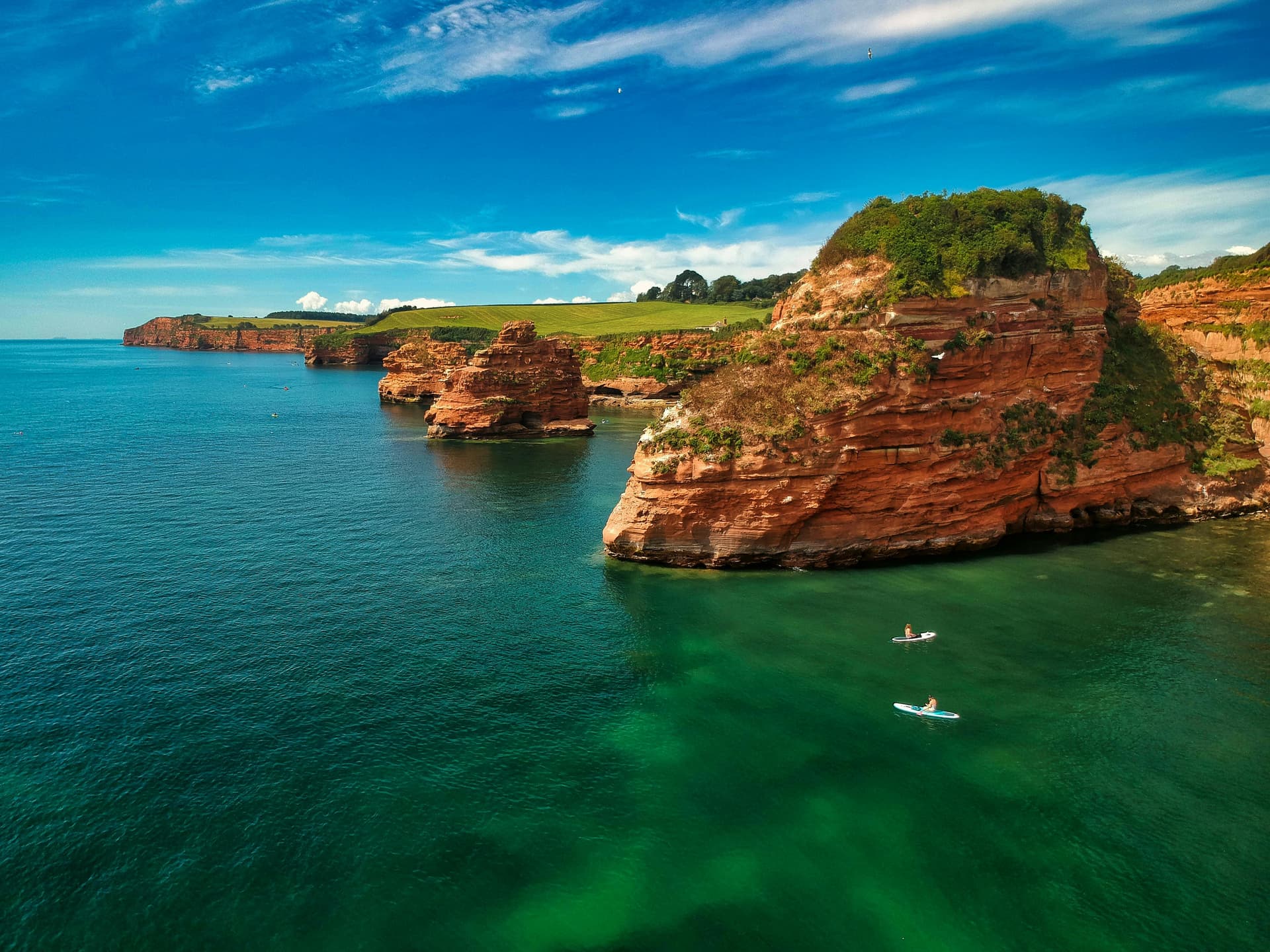
Devon is the only group destination in England that offers two genuinely different coastlines and a national park in between. Choosing between them is the first real decision, and it should follow the group rather than the photographs.
South Devon and the South Hams
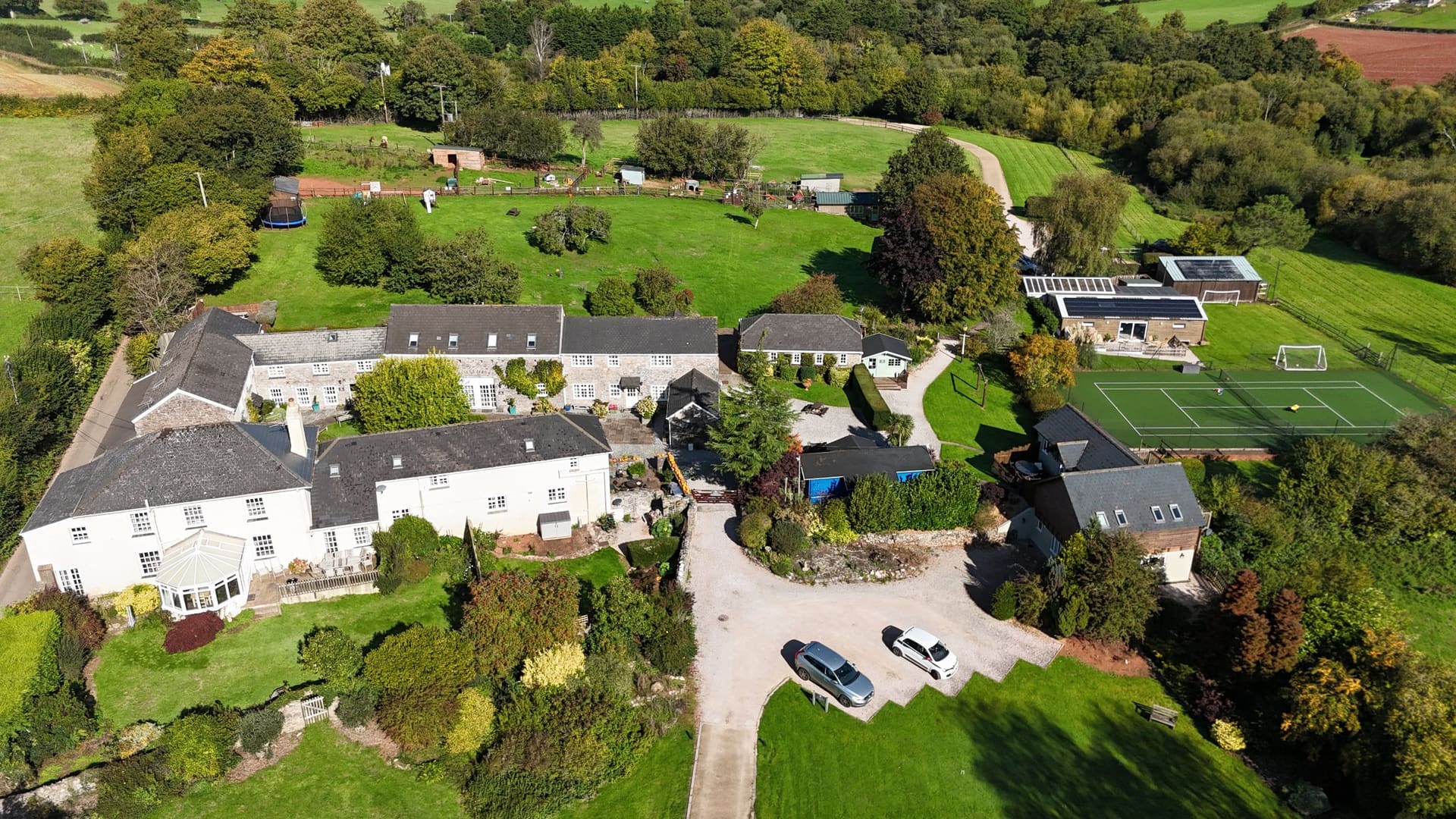
Salcombe, Dartmouth, Kingsbridge and the estuaries: sheltered water, sailing, paddleboarding, long lunches and the county’s most in-demand houses. It is the right choice for a group that wants to be on the water without being battered by it, and for anyone whose idea of a good morning involves a bakery and a boat. Further round the coast towards Torbay, Compton Pool Farm in Marldon sleeps up to 56 across a cluster of separate cottages with its own swimming pool and games room — useful if the group is really several families booking together rather than one uniform party.
North Devon
Croyde, Saunton and Woolacombe: big Atlantic beaches, a proper surf scene and a wetsuit-drying rota. Groups who actually want to stand up on a wave should go north, and should accept that the north coast is wilder and less polished than the south.
Dartmoor and mid Devon
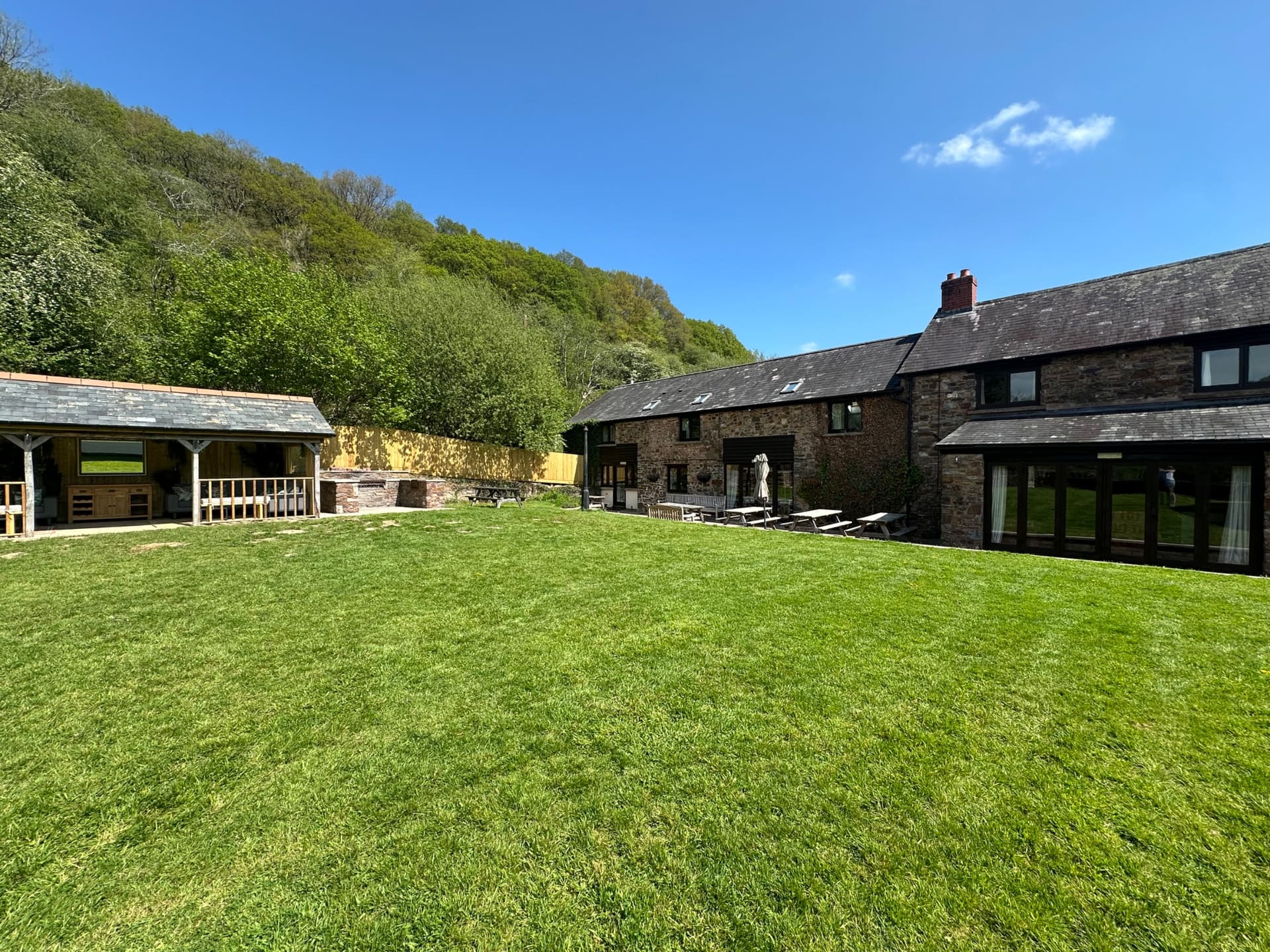
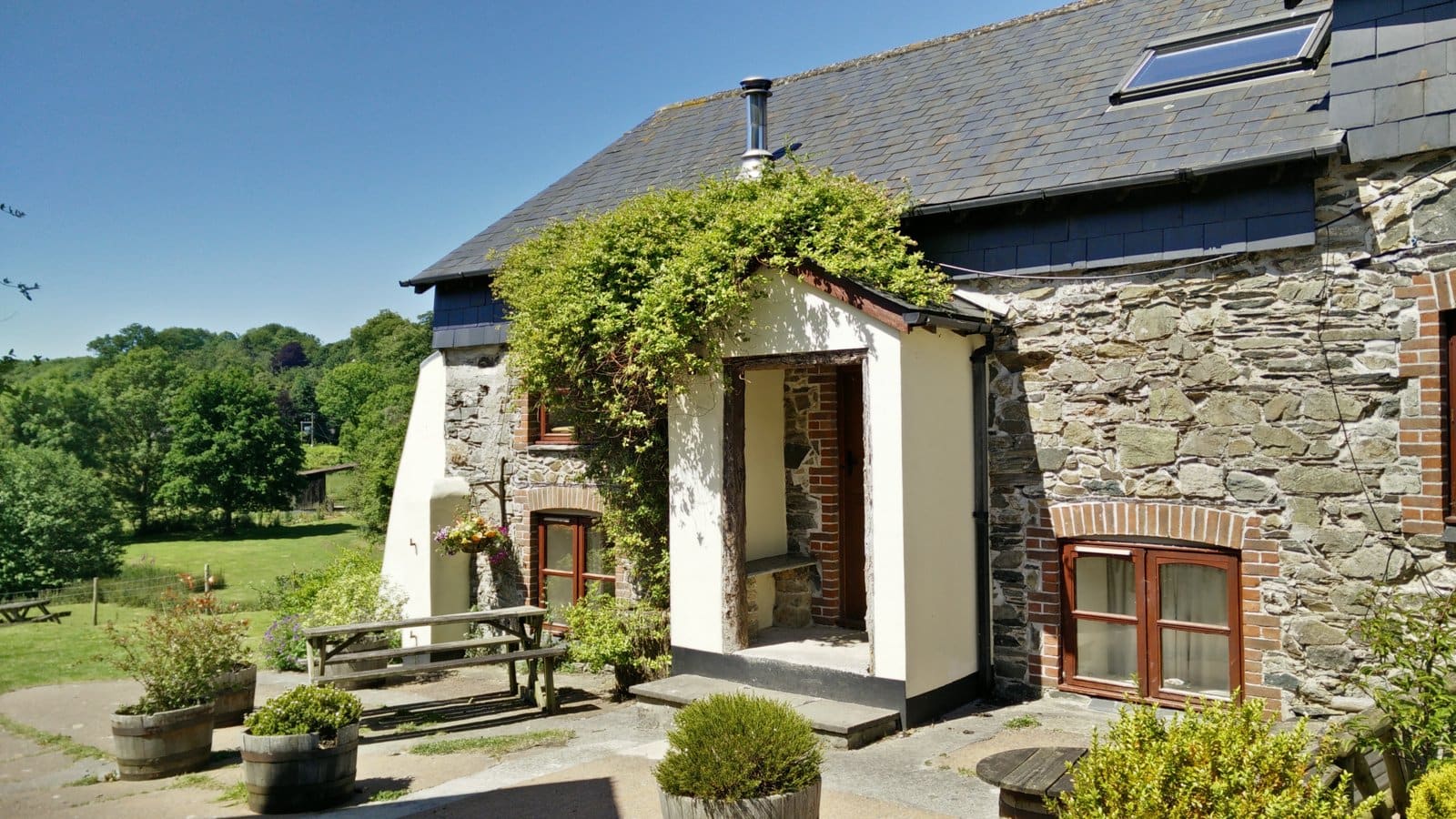
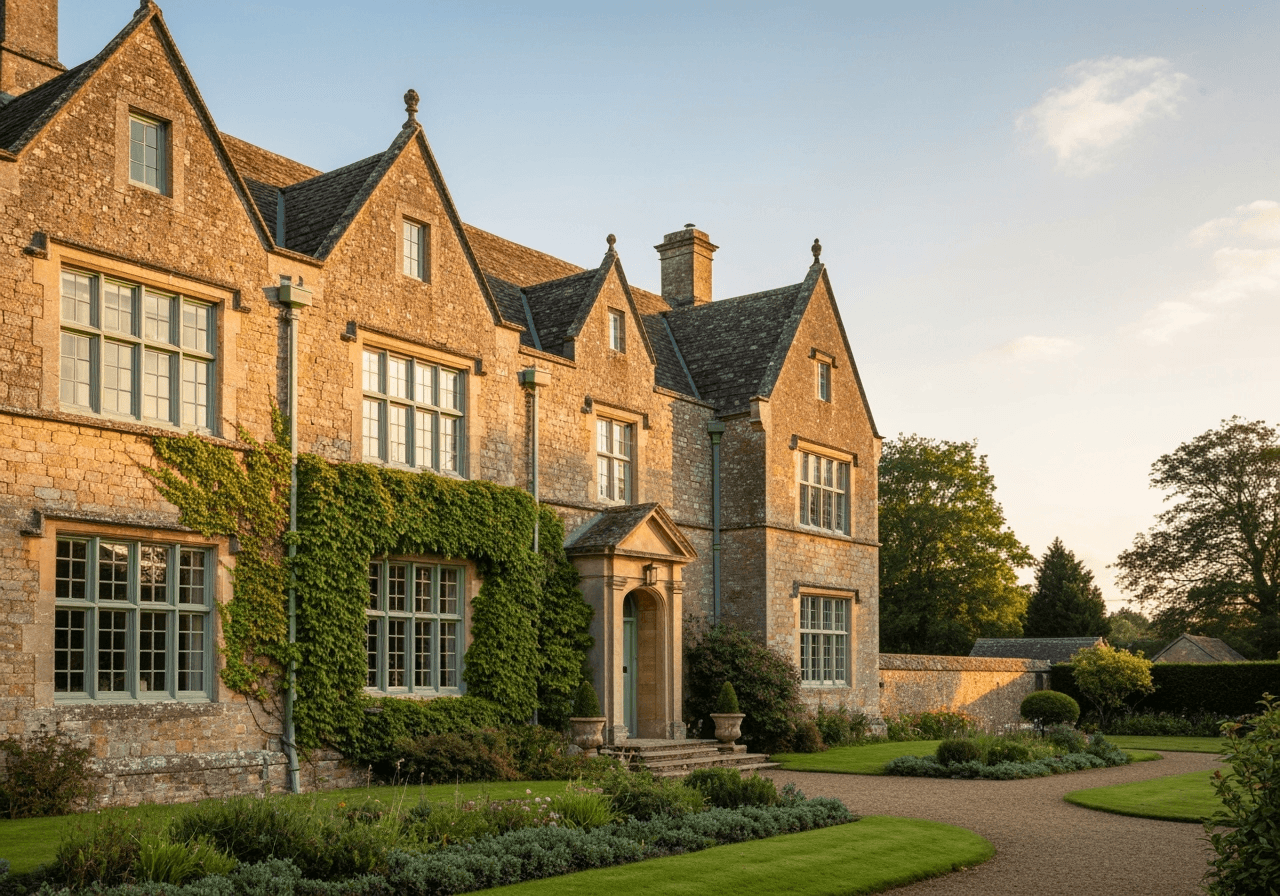
Between the coasts sits Dartmoor, where large stone farmhouses come with tors on the doorstep, dark skies and open moor from the front door. For a walking-and-firepit group it is the quiet alternative to a coastal postcode, and it works especially well when the plan is to stay put rather than tour.
Getting a large group into Devon
The M5 is the spine, and it is the thing to plan around. It is the main summer holiday route to the whole South West, so a Friday afternoon departure in July puts your group in the same traffic as everyone else’s. Leaving in staggered waves, or making Friday a late arrival with a stocked kitchen rather than a restaurant booking, removes most of the stress.
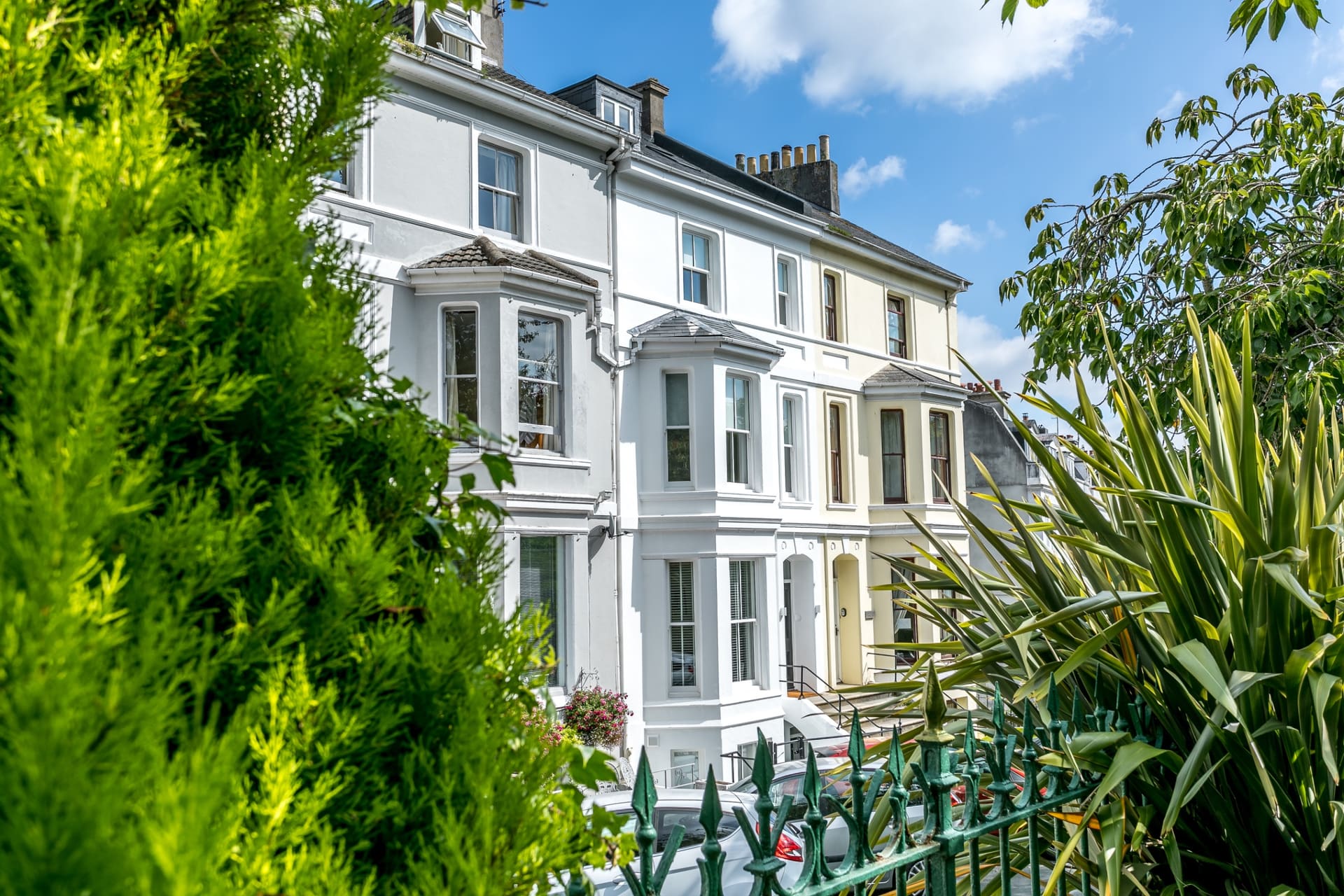
Rail is a real option for the south and east of the county: Exeter, Newton Abbot, Totnes and Plymouth all sit on the main line, and the branch line to Barnstaple opens up the north coast. North Devon is otherwise reached by the A361 link road rather than a motorway, which is worth knowing before someone promises the group a quick hop across the county. Whichever way you arrive, the last few miles are the ones to check — South Hams lanes in particular are narrow, high-hedged and single-track in places, so confirm minibus access with the owner rather than assuming it. A house within walking distance of a station removes that problem entirely — Hoe Park House, a Victorian townhouse beside Plymouth Hoe, puts the group in reach of the Barbican and the waterfront without needing a car for the evening.
What a Devon group house should give you
Beyond bedrooms, the things that decide whether a Devon weekend runs smoothly are unglamorous. Parking is the first: coastal villages are tight, and a house that lists parking for four cars will not absorb a group that arrives in seven. Drying space is the second, because between the sea, the moor and the weather, something will always be wet. A single dining table that seats everyone is the third, and it matters more than any other feature — a group that splits across two rooms for dinner never quite feels like one group.
Then check the distances that marketing language tends to blur. “Walk to the beach” can mean a level five minutes or a steep descent with steps and a hard climb back at the end of the day carrying a cool box. “Near the village” can mean a lane with no pavement and no lighting, which changes the evening plan considerably once it gets dark. Ask for specifics, and ask whether the walk is one anyone in your group would rather not do twice a day. Our questions to ask before booking a group house covers the rest of the list. Deposits, cancellation policies, minimum stays and house rules are set individually by owners, so read each property’s terms rather than assuming a common standard.
It is also worth thinking about how the house handles a wet day, because Devon will supply at least one. A group that has to sit in two separate rooms because there is nowhere big enough for everyone will feel it by the second afternoon. Look for one generous shared space — a farmhouse kitchen, a games room, a proper sitting room — and treat it as more important than an extra bathroom or a better view.
Seasons and trade-offs
High summer gives you the fullest version of Devon: lifeguarded beaches, boat trips running, everything open — alongside the busiest roads and the highest demand for houses. Late spring and early autumn are the planner’s choice, with a quieter coast path, easier restaurant tables and the sea still swimmable into September. Winter turns the county into a fire-and-walking destination, which suits a milestone birthday or a reunion far better than people expect, provided nobody was promised a beach.
Dartmoor deserves a specific caution in the colder months: the moor generates its own weather, and a group of mixed experience should stick to marked, low-level routes rather than improvising. If walking is the point of the trip, our guide to the best group houses for walkers and hikers is a better starting point than a map.
Structuring a Devon weekend
The pattern that works is one big day out and one slow day. A boat trip, a surf lesson or a serious coast path section on the Saturday; a market, a garden or an estuary stroll on the Sunday. Trying to do both coasts in a weekend is the classic overreach — it can be done, but it converts a holiday into a driving tour.
For mixed-ability and multi-generational groups, the southern estuaries are the kindest choice: there is almost always a flat waterside walk, a ferry crossing, or a pub with a view for anyone not doing the long route. That matters more than it sounds, because the fastest way to sour a group holiday is to leave one or two people with nothing to do while everyone else is out. Plan the split deliberately rather than letting it happen by accident, and agree a time and a place to reconvene.
If the group includes younger children and older relatives at the same time, Diggerland Devon near Cullompton is worth building an afternoon around — ride-on diggers and dumper trucks that a five-year-old can drive and a grandparent can watch from a bench, right off the M5 rather than deep down a Devon lane. It solves the same problem as the estuary walk above, just for a family day rather than a mixed-fitness one.
For hen and birthday weekends, bring the celebration to the house. A private chef for the Saturday night or a cocktail masterclass in the kitchen saves the group from arranging late-night transport in a village served by one taxi, and it keeps everybody in the same room, which is usually the point of the weekend. Our group house activities and entertainment guide has more that works without a car.
When you are ready, browse our Devon group houses, compare them against Cornwall or Dorset if the group is still arguing about distance, scan the full collection, and use the group budget planner to agree what everyone is paying before anyone falls in love with a house that is out of reach.
How we counted
The figures above come from reading every one of the 33 houses live on Group Escape Houses on 4 September 2026 and recording what each owner states in their own listing. Where an owner has not stated something we count it as not stated rather than assuming it. Price figures exclude one listing whose advertised weekend total is clearly a nightly rate, which would otherwise drag the median down; that leaves 32 houses in the price counts and 33 in every other count. It is a small sample and we say so plainly — but it is the exact set of houses you are choosing from here, counted on a stated date rather than described in round numbers.
Sources
- Group Escape Houses — our own count of every house live on this site on 4 September 2026
These are counts of live listings, not estimates or projections. We recount them when the inventory changes. Prices are the owner’s advertised weekend total for exclusive use of the whole house.