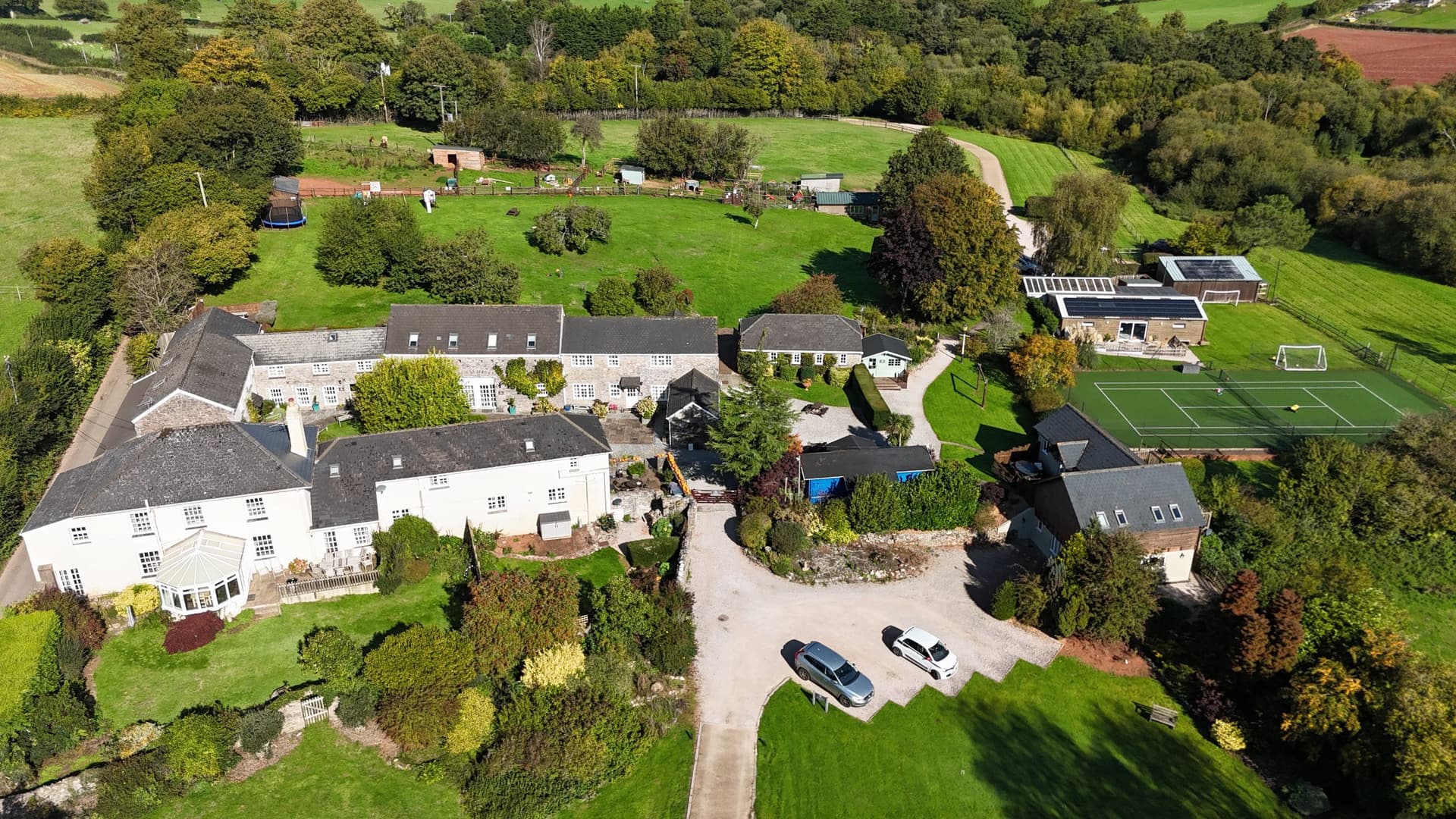

Multi-generational trips spanning grandparents, parents and children are one of the fastest-growing types of UK group stay, and self-catering houses increasingly beat hotels for these groups for one blunt reason: a hotel cannot give grandma, the toddlers and the teenagers one shared kitchen table. But a family reunion house is one of the hardest bookings in group travel to get right, because you are choosing for people aged two to eighty-two at once. Here is what actually matters.
The capacity picture across live listings
Reunions are the group type most likely to outgrow a house. Of the 33 houses live on this site on 4 September 2026, nineteen sleep 21 or more and five sleep 31 or more, so the large end exists — but it is where the choice narrows fastest.
| Sleeps | Houses |
|---|---|
| Under 10 | 3 |
| 10–15 | 8 |
| 16–20 | 3 |
| 21–30 | 14 |
| 31 or more | 5 |
Bedrooms run from 2 to 28 across the site, with a median of 8. Book the capacity band above the one you think you need: reunions grow between the first message and the final list more reliably than any other kind of group.
Ground-floor bedrooms are the whole ballgame
Start the search by filtering for a ground-floor bedroom with a nearby bathroom — before the hot tub, before the views, before anything. In many family reunions we hear about, the deciding feature isn't the grounds or the games room but a ground-floor bedroom that lets an older relative skip the stairs entirely. When that room doesn't exist, the oldest guests quietly have a worse weekend and nobody says so at the time. A listing that states step-free access and a ground-floor bedroom explicitly, rather than leaving you to infer it from the photographs, is the level of clarity worth looking for.
One big table, and separate escape zones
The point of a reunion is the meal where everyone sits down together — so confirm the dining table genuinely seats your full number, not most of the group around a table plus a few more on a breakfast bar. But the counter-intuitive second requirement is separation: a snug for the grandparents when the toddlers hit peak volume, a games room or den where the teenagers can vanish, a garden big enough for the energy of the under-tens. The best reunion houses let the family be together and apart in the same hour. That is the property brief in one sentence.
The case against hotel rooms
A large house avoids the maths that makes hotels awkward for reunions: several family rooms booked separately, breakfast negotiated as a group each morning, and every evening ending the moment people retreat to their own rooms. A house solves the thing hotels structurally can't: the evening itself. Children in bed upstairs, adults still together downstairs, nobody driving anywhere. Run the actual cost of your shortlisted house against an equivalent block of hotel rooms for your family's numbers — the comparison is specific to your dates and group, so it's worth doing properly rather than assuming either way.
Timing and the booking clock
Reunions cluster around school holidays, milestone birthdays and anniversaries — fixed dates you can't move, which means booking early is worth more to you than to almost any other kind of group. Large houses for peak school-holiday weeks are consistently the first to go. The flexibility many families do have is a term-time long weekend for the retired generation plus pre-school children, when self-catering calendars have far more empty nights than full ones and real gaps exist to book into — ask owners directly what their term-time rates and availability look like.
Questions to ask before you pay
Beyond the standard owner questions, reunions add a few: stair gates and highchairs (many houses have them — ask rather than pack), whether the garden is fenced and the pond situation, bath versus shower-only for small children, and mobile signal if an elderly relative carries a personal alarm. Owners answer these gladly — booking direct means you get real answers rather than a listing checkbox. Our accessible group accommodation checklist covers the fuller access conversation if anyone in the family has mobility needs.
Splitting the cost across generations
Incomes and circumstances vary widely across a multi-generational family, and it's worth agreeing the split method before anyone books rather than assuming everyone will pay an equal share happily. Splitting by bedroom, offering a reduced rate for children, or having one branch of the family cover the house while another covers food are all common approaches. Our cost-splitting guide covers how to collect and track the money once you've agreed a method.
Who takes charge of organising
Family reunions often lack the single obvious organiser that a friendship-group trip has, since several relatives might reasonably take the lead. Agreeing early who owns the booking, the deposit collection and the final decisions — even if input comes from several family members — avoids the trip stalling between well-meaning relatives each assuming someone else is driving it forward. It doesn't need to be the most senior generation; often it's whoever has the time and the patience for the admin.
Planning for the day nobody organises
Most reunions have one deliberately planned day — a birthday, an anniversary, a big group activity — and at least one day with nothing scheduled at all. Resist the urge to fill every hour. An unplanned afternoon where some of the family walks, some naps, and some simply sits in the garden together is often what people remember most fondly, precisely because nobody was managing it. Build the loose day into the plan on purpose rather than leaving it to chance.
Capturing the occasion
Reunions that bring together relatives who rarely see each other are worth documenting properly. A short window set aside for a group photograph, before anyone's tired or the light has gone, is easy to forget in the moment and hard to recreate later. Some families ask one relative to bring a proper camera rather than relying on phones; others print a handful of photos afterwards for the relatives least likely to see them on social media. Neither needs planning beyond one person remembering it matters.
Browse large group houses across the UK, or start with our multi-generational planning guide for the room-by-room checklist. For the milestone-birthday version of this weekend, the birthday houses guide picks up the thread.
How we counted
The figures above come from reading every one of the 33 houses live on Group Escape Houses on 4 September 2026 and recording what each owner states in their own listing. Where an owner has not stated something we count it as not stated rather than assuming it. Price figures exclude one listing whose advertised weekend total is clearly a nightly rate, which would otherwise drag the median down; that leaves 32 houses in the price counts and 33 in every other count. It is a small sample and we say so plainly — but it is the exact set of houses you are choosing from here, counted on a stated date rather than described in round numbers.
Sources
- Group Escape Houses — our own count of every house live on this site on 4 September 2026
These are counts of live listings, not estimates or projections. We recount them when the inventory changes. Prices are the owner’s advertised weekend total for exclusive use of the whole house.