
One guest with limited mobility shouldn’t mean the whole group compromises on the weekend — and with the right house, it doesn’t. But “the right house” has to be verified, not assumed, because access information on listings is inconsistent across the whole industry. Large group houses are frequently converted farmhouses, rectories and manor houses built long before accessible design was a consideration, so the gap between a lovely photograph and a workable layout can be wide. This checklist is the verification: work through it with the owner before any money moves, and the weekend works for everyone rather than working around one person.
What accessibility actually looks like across live listings
This is the least comfortable count on the site, and the most useful. Of the 33 houses live on 4 September 2026, eighteen have a ground-floor bedroom, eight describe themselves as wheelchair accessible, six state step-free access and exactly one has a lift.
| Feature the owner states | Houses | Share |
|---|---|---|
| Ground-floor bedroom | 18 | 55% |
| Wheelchair accessible | 8 | 24% |
| Step-free access | 6 | 18% |
| Lift | 1 | 3% |
Note the gap between eighteen ground-floor bedrooms and six step-free entrances: a bedroom on the ground floor is no use if there are three steps to the front door. Those are different questions and you have to ask both.
1. Start with the guest, not the house
Before browsing, write down what your guest actually needs: step-free entry or a few steps with a rail? A wheelchair-width doorway or just no stairs? A wet room, or a walk-in shower with a low tray? Fatigue and distance matter as much as steps — can they manage a corridor from the car, or does the accessible bedroom need to be the closest room to the door? Five minutes of honest specifics, written down before you start searching, turns a vague browse into a short checklist an owner can answer precisely in one reply. If more than one guest has different needs, list each of them separately rather than assuming one description covers everyone.
2. The entrance, measured honestly
Character properties hide steps everywhere — the porch, the threshold, the “just one step down” into the kitchen that nobody thought to mention. Ask the owner to count every step between the parking area and the ground-floor bedroom, not just the front door, and to describe the parking surface itself. Gravel that looks charming under a suitcase wheel is genuinely hard work under a wheelchair or a walking frame, and a slope that a fit adult barely notices can be the difference between managing alone and needing help every time.
3. The bedroom-and-bathroom pairing
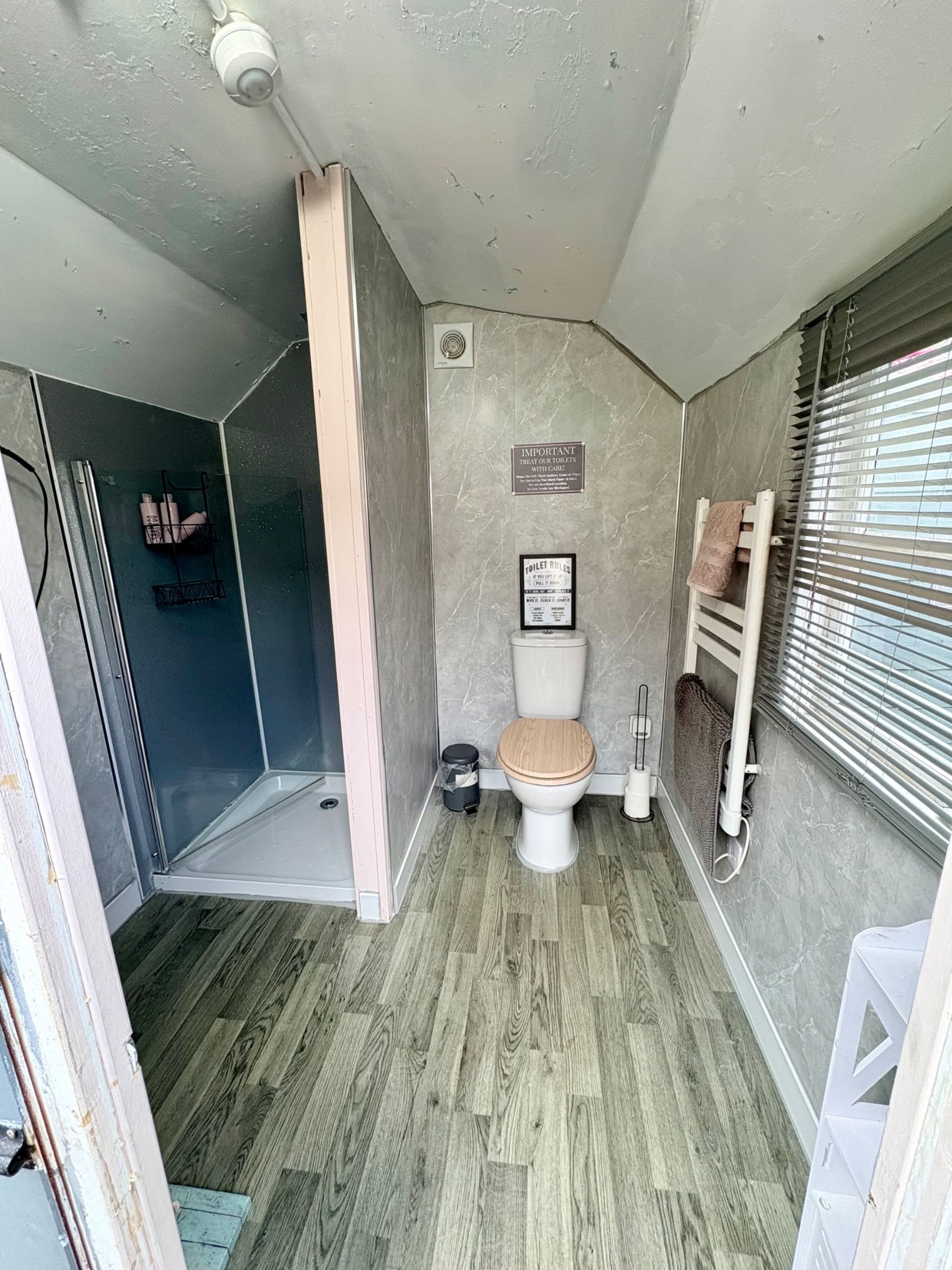
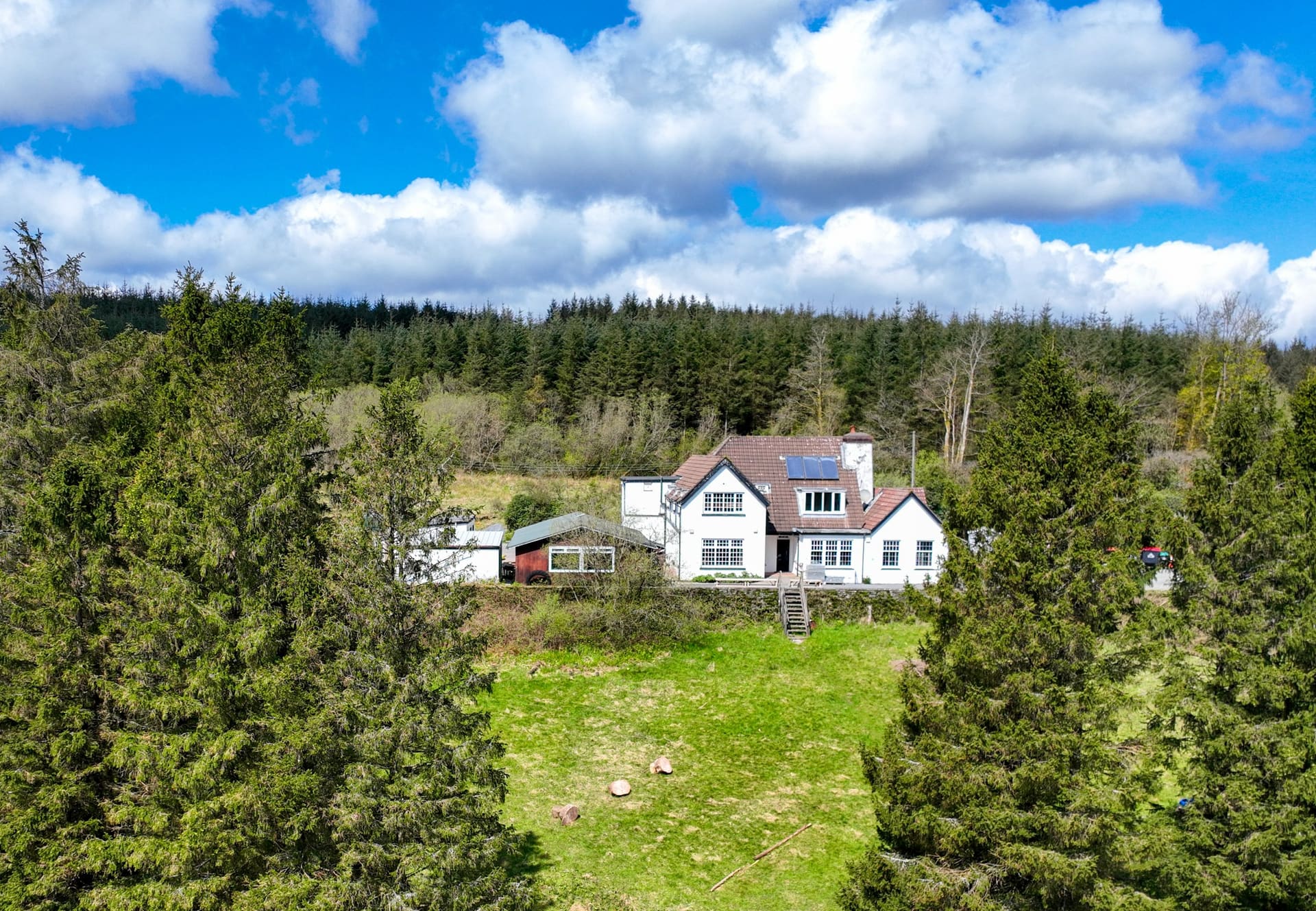
A ground-floor bedroom is only half the answer — the other half is where its bathroom is and what’s actually in it. The most workable arrangement is an en-suite wet room; a reasonable alternative is a nearby bathroom with a walk-in shower and no internal steps between the two rooms. Ask specifically whether the ground-floor bedroom and its bathroom are adjacent, or whether reaching the bathroom means a corridor, a turn, or a step that the listing photos don’t show. Broad Park in Cornwall is a useful example of a property that states step-free access and a ground-floor bedroom outright, rather than leaving it to be inferred from photos. Our accessible group accommodation page is a sensible starting point for a shortlist, and the owner confirms the specifics from there.
4. The social spaces test
The weekend happens in the kitchen, dining room and sitting room, not just the bedroom. Check all three are on one level and reachable without doubling back through a different part of the house — a sunken lounge, a split-level kitchen or a dining room up three steps quietly excludes someone from the heart of the house, which defeats the entire point of booking somewhere together. Ask, too, whether the accessible bedroom is near these rooms or at the far end of a long corridor; distance adds up over a whole weekend even where there are no steps at all.
5. Equipment, borrowed locally
Shower chairs, toilet frames, portable ramps and even hoists can be hired in most UK regions and delivered to the house for the length of the stay. Sort this after the house is confirmed but well before arrival, and tell the owner what’s coming — they can usually say exactly which room it should go in and whether there is anywhere suitable to store it out of the way for the rest of the group. If you are new to hiring this kind of equipment, ask the owner whether previous guests have used a local supplier; many can point you to one without you having to search from scratch.
6. Ask for photographs
Owners photograph their houses to look beautiful, not to document thresholds. Any good owner will happily send phone photos of the entrance, the bathroom, and the doorways in question — taken there and then, not pulled from an old listing. The ones who do this without fuss are, reliably, the ones whose houses work on arrival; it is the same signal we describe in our questions-to-ask guide. A photo of a doorway with a tape measure laid across it is worth more than any adjective in a description.
7. Mixed-ability and multi-generational groups
Access needs rarely arrive alone in a group booking — they usually sit inside a wider multi-generational trip with young children, teenagers and grandparents all sharing one house. The same checklist applies, but it is worth thinking about the whole shape of the group rather than one guest in isolation: is there a quiet ground-floor space someone can retreat to during a noisy afternoon, and does the layout let that guest join every meal and every evening rather than only the accessible parts of the day? Our multi-generational family holiday guide covers the wider planning that usually sits alongside an access checklist like this one.
8. Put it all in writing before you pay
Once you have answers to every item above, send them back to the owner as a short written summary and ask them to confirm each point. This isn’t about distrust — it protects both sides, gives the owner one clear list to check against rather than a scattered email thread, and means nobody is relying on memory if a question comes up again nearer the date. Our large house booking checklist covers the rest of what to confirm in writing before a group booking of any kind, and pairs well with this one.
The short version
Specific needs, written down. Every step counted, not just at the front door. Bedroom and bathroom verified as a pair, and checked for distance from the rest of the house. Social rooms confirmed on one level. Equipment hired locally and flagged to the owner in advance. Photographs of anything uncertain. The whole group’s shape considered, not just one guest. And all of it confirmed in writing before you pay a deposit. Because every enquiry here goes straight to the owner, each item on that list is one direct question away from a reliable answer. Browse group houses across the UK with this checklist open, and if the trip you’re planning is a reunion built around an older or less mobile relative, our family reunion houses page and our 20-plus guest checklist are worth reading alongside it. For period properties specifically, our country houses collection is a reasonable place to start — provided you still ask every question on this list.
How we counted
The figures above come from reading every one of the 33 houses live on Group Escape Houses on 4 September 2026 and recording what each owner states in their own listing. Where an owner has not stated something we count it as not stated rather than assuming it. Price figures exclude one listing whose advertised weekend total is clearly a nightly rate, which would otherwise drag the median down; that leaves 32 houses in the price counts and 33 in every other count. It is a small sample and we say so plainly — but it is the exact set of houses you are choosing from here, counted on a stated date rather than described in round numbers.
Sources
- Group Escape Houses — our own count of every house live on this site on 4 September 2026
These are counts of live listings, not estimates or projections. We recount them when the inventory changes. Prices are the owner’s advertised weekend total for exclusive use of the whole house.