
We have an unusual window into how women actually celebrate together: Butlers in the Buff’s booking records at our sister brand cover more than 100,000 groups across over 20 years of trading. Two figures in Butlers in the Buff’s booking records changed how we think about the girls’ weekend — life drawing grew 149% between 2017 and its 2022 peak, and hosted cocktail classes now run at roughly 120 a year. The big night out has not died. But the centre of gravity has shifted from the club queue to the living room, and that changes which house you should book.
What follows is not a list of pretty houses. It is the set of questions that separate two properties which look identical in photographs — because those differences are what decide the weekend, and almost all of them can be settled before you pay.
Why the lounge is the most important room in the house
Once you accept that the weekend happens indoors, choosing a house gets much simpler. The question stops being how many bedrooms and becomes whether one room seats everyone at once. Count the sofa seats in the listing photographs before you count the beds. If the group is twelve and the sitting room takes eight comfortably, four people spend the evening perched on the arm of a chair or drifting into the kitchen, and the group quietly splits in two.
Space matters as much as seats. A hosted activity needs floor or table space in the same room as the seating, not instead of it. Ask the owner two things: what the main sitting room seats, and whether there is a table or clear worktop big enough for a supplier to set up on. An enormous farmhouse kitchen with a poky snug attached is a lovely house and the wrong house for this weekend.
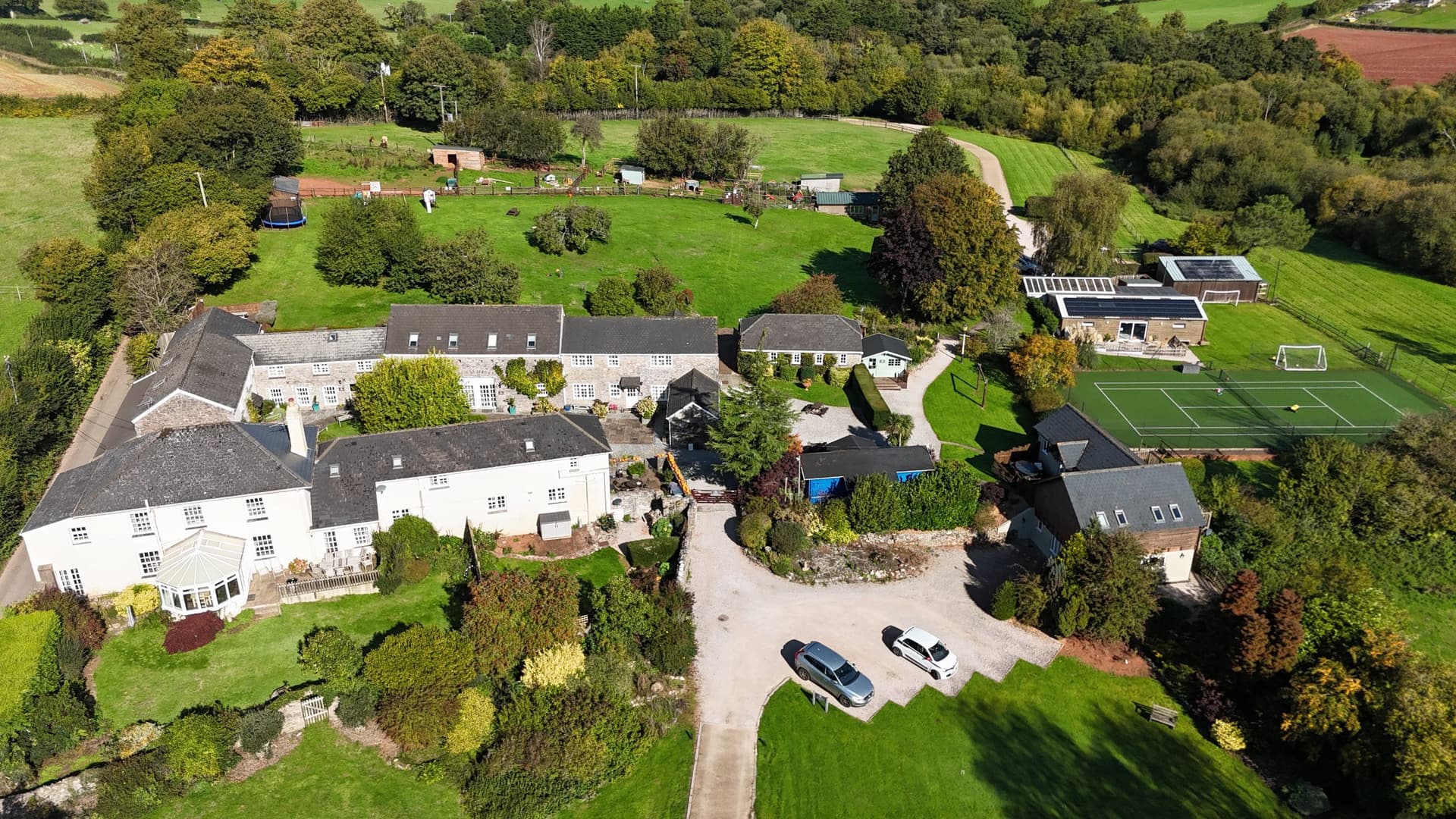
The second-best feature, and the most underrated, is a second sitting room. Groups run at different speeds late at night, and one room that stays loud plus one room where three people can talk quietly is the difference between everyone getting the weekend they wanted and everyone compromising. Penty Parc in Pembrokeshire is one of the properties on our books built with celebration weekends specifically in mind, with a sound system and large dining space alongside the sitting room. When you browse our houses, read the listings for living space first; the bedroom count is the easy part.
The things that actually vary between houses
Two properties can sleep the same number and run completely differently. These are the variables worth checking, in the order they cause problems.
Bathrooms, and where they are. The getting-ready hour on Saturday evening is the biggest pressure point of the weekend, and it is decided by how many bathrooms there are and which bedrooms they serve. Ask for the breakdown — not “five bathrooms” but which rooms have their own, whether the family bathroom has a shower or only a bath, and whether there is a downstairs loo so the queue upstairs is only ever for showers. Mirrors with sockets near them are a real differentiator that no listing mentions.
The bedroom mix. Doubles, twins, bunk rooms and sofa beds are not interchangeable when the group is a mix of couples, close friends and people who barely know each other. Get the room-by-room layout in writing before you allocate anything.
The dining table. One sitting, everyone at it. A house that seats ten at the table and expects the other four to eat at the island has made a decision about your Saturday night on your behalf.
Outdoor space and a hot tub. Tubs vary enormously in size, and the hours they can be used are set by each owner rather than by any industry norm — our hot tub houses guide covers what to ask. If the tub is the reason you are booking, confirm in writing that it is operational for your dates and included in the price.
What the owner permits. Music, decorations, outside suppliers, day visitors and outdoor noise are all set property by property. Ask rather than assume, and keep the answer in an email you can find again; our questions to ask before booking is the list we would send our own friends.
Where the weekends actually happen
Brighton is the all-time number one in Butlers in the Buff’s booking records with over 2,100 group bookings, and it earns the position: sea air for the morning after, restaurants used to tables of sixteen, and a house within reach of it all so nobody is negotiating taxis at one in the morning. It is the right choice for a group that wants a night out as well as a house.
Bath suits the spa-and-supper version — compact and walkable, where the evening can be a long dinner rather than a late one. The Cotswolds is where the quiet-luxury version lives: honey-stone houses, big gardens, and a weekend where nobody leaves the property after Friday except for a walk.
The tiebreaker is travel fairness, not prettiness. Draw the drive times from where everyone actually lives before falling for a house at the far end of the country, because journey length decides who makes Friday dinner — and Friday dinner is where the weekend starts. Our girls weekend getaways collection makes that comparison easier.
Building the weekend the group actually wants
The strongest weekends have one anchor and a lot of deliberate empty space. Pick a single Saturday centrepiece — a private chef dinner, a cocktail masterclass, a set of treatments at the house — and let everything else stay unscheduled. Groups that book three activities in a day spend the day watching the clock, and the conversations people remember are the ones that happen when nothing is about to start.
Sequence matters more than choice. Something slow in the morning, the hosted activity in the late afternoon while people are getting ready anyway, dinner after it. That order means nobody changes twice and nobody waits around damp in a robe while a supplier sets up. If anyone has an early start on Sunday, do the loud thing on Friday and keep Saturday long and slow.
Book suppliers around the same time you book the house. The practical questions — can they reach this property, is there parking, do they need the kitchen for two hours — are far easier to solve early, and whether outside suppliers are permitted at all is the owner’s call, so ask them first.
Planning for a group that is not all the same
Most groups of friends now include someone who does not drink, someone who is pregnant or has a small baby, someone who cannot manage a long walk, and someone who has to leave by four on Sunday. None of that is a problem if you plan for it, and all of it is a problem if you plan for the group you had ten years ago.
The practical version: ask for a ground-floor bedroom for anyone who finds stairs difficult, and confirm what is actually on that floor rather than trusting the word “accessible”. Ask suppliers in advance for alcohol-free versions of tastings and classes, because most will do it when asked at booking and almost none can improvise it on the night. Build one activity everybody can do sitting down. And do not give the person leaving at four a room they have to strip and vacate at eleven.
Money, without the awkwardness
A house divides cleanly across a group, which is exactly why the split needs deciding before anyone sees a bedroom. Agree the method first: an even split with rooms drawn at random, or tiered pricing where the en-suite doubles pay a little more than the twins. Both are fair; the unfair one is the method invented after arrival. Our guide to splitting costs sets out the mechanics.
Separate the shared pot from personal spending explicitly. House, food shop and any booked activity go into the kitty; drinks on a night out, treatments only some people want, and travel do not. Collect a deposit from every person before you confirm anything — a “yes” in a group chat costs nothing to say and nothing to withdraw, and the organiser should never be personally exposed to a friend’s change of heart.
The failure modes
Four things tend to go wrong, and it's usually the same four. Booking for the photograph rather than the floor plan, when the hot tub appears in twenty pictures and the sitting room is where forty hours of the weekend happen. Leaving bedroom allocation until arrival, which turns a happy group into a negotiation within ten minutes of the door opening. Over-scheduling, so nobody relaxes and someone is always being hurried. And assuming the owner permits something nobody has actually asked about — a supplier, a decoration, day visitors, music outside late.
All four are prevented by one habit: ask specific questions in writing before you pay, then tell the group the answers. Book the house for the lounge, agree the money before the rooms, keep one thing in the diary and leave the rest empty, and the weekend runs itself.
Where these numbers come from
The booking figures in this article are our own, not an industry estimate. They come from the booking records of our sister brand Butlers in the Buff, which has been running group celebrations for more than twenty years and has served over 100,000 groups — so they describe what groups actually did, not what a survey says they intended to do. They are counts taken from those records rather than projections, and where we quote a share (for example the share of bookings made in a given month, counted by the month the booking was placed rather than the month of the event) it is a share of that whole dataset.
Two honest limits. It is one company’s book, weighted towards hen and stag celebrations, so it describes the celebration market rather than all UK group travel. And it is historical: it tells you how groups have behaved, which is a good guide to how they will behave, not a forecast. Anything from outside our own records is attributed in the sentence it appears in and linked below.
Sources
- Butlers in the Buff booking records — our sister brand’s own bookings, over 100,000 groups across more than 20 years of trading
Figures from our own booking records are counts, not estimates. Third-party figures are quoted as the original report gives them and linked above so you can check them. Last checked 4 September 2026.