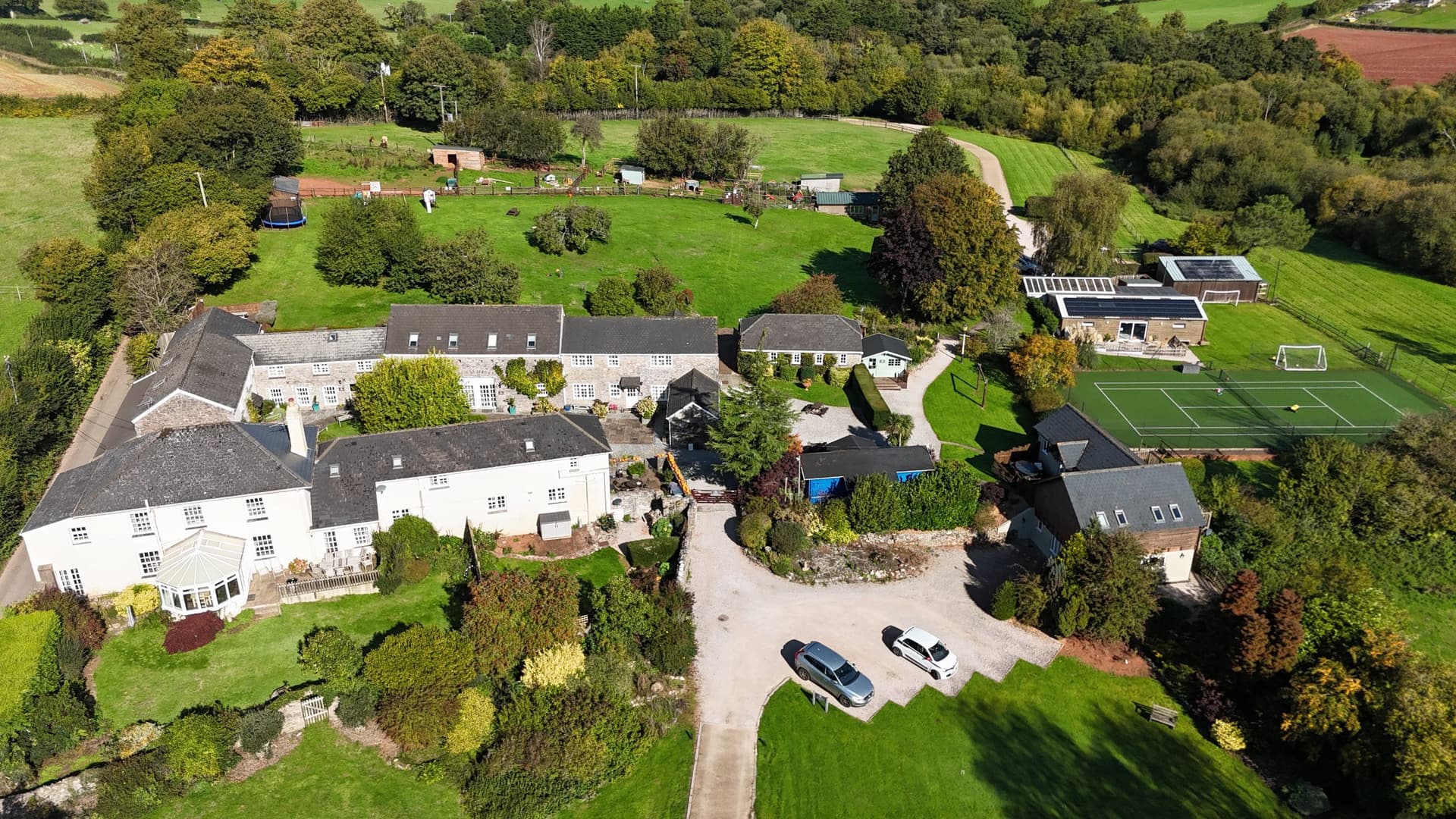

Booking one house for grandparents, parents and children is not the same as booking a house for twelve friends. Multi-generational trips are the fastest growing type of UK group stay, and they fail on layout far more often than on location. Everyone wants to be together, and everyone needs somewhere to escape to.
Accessibility is the question nobody asks early enough
If anyone in the group has limited mobility, this decides the shortlist before anything else. Ask for a ground-floor bedroom with its own bathroom rather than a ground-floor bedroom near a bathroom. Check whether entry is step-free, how far the parking is from the front door, and whether there is a handrail on both sides of the stairs.
Ask for photographs of the actual staircase. Descriptions are optimistic, and a period property with a steep turn halfway up is a different proposition from a converted barn with a wide modern flight.
Noise geography
Three generations keep three different timetables. Babies nap mid-afternoon, teenagers are awake at midnight, and grandparents want a quiet sitting room that is not the one with the television in it. Houses with two separate living spaces prevent more friction than any other single feature.
Annexes and coach houses work particularly well. They give older relatives or a young family their own front door without removing them from the group. If the property has one, ask whether it is genuinely self-contained or just a bedroom with a kettle. New Hall Farm in County Durham is a real example of this shape — two separate houses on one property, sleeping 16 and 6, so a family can spread across both and still share the grounds.
Bedrooms and bed configuration
Ask which rooms are actually adjacent. Parents of small children want to be next door, not at the other end of a corridor. Ask what is zip-and-link, since a house that can switch between doubles and twins suits a mixed group far better than one with fixed beds.
Cots and highchairs are worth confirming rather than assuming, and so is the number available. Two families with toddlers need two of each.
Who gets which room, decided before you arrive
Room allocation causes more friction in a multi-generational group than almost anything else, because the criteria are genuinely different from a friendship group's: proximity to a bathroom, distance from the stairs, and who's sharing with a light-sleeping toddler all matter more than who's paying the most or arrived first. Decide the allocation as a family before you travel, ideally sharing a simple room list in the group chat, so nobody claims a room by dropping a bag on the bed the moment the car doors open. It also gives you one more chance to catch a mismatch — an elderly relative allocated the room furthest from the bathroom — while it's still easy to fix.
Outdoor space and water
Ask whether the garden is enclosed, because an unfenced boundary near a road or water changes how relaxed the week is. If the property has a swimming pool or a hot tub, ask about supervision rules, depth, and whether there is a gate or cover — these details are set by the individual property and worth confirming directly rather than assuming.
The kitchen and the table
Three families cooking is a different load from one. Ask about oven count, dishwasher count and fridge capacity, and whether there is a second fridge or a utility room. Then ask the question that matters most: does the dining table seat everyone at once, or does the group split into two sittings?
A house where everyone eats together is the whole point. If the table splits the group, the holiday splits with it.
Splitting the cost fairly
Incomes vary across generations, and this is the conversation that turns awkward if it happens after booking. Common approaches are splitting by bedroom rather than by head, charging children at a reduced rate, or having one part of the family cover the house while another covers food and activities. Agree it before you pay a deposit — our cost-splitting guide covers the mechanics of collecting and tracking the money once you've picked a method.
Planning around very different energy levels
The single hardest part of a multi-generational trip is timing rather than layout: babies nap, teenagers sleep late, and grandparents often want an earlier evening than the rest of the group. Rather than fighting this, plan the day around it. One shared meal that everyone genuinely attends — usually dinner — anchors the day, while breakfast and lunch can be looser and self-served. Two separate living spaces earn their keep here more than almost any other feature, letting an early night happen in one room while a later one continues in another without anyone feeling excluded from either.
The questions worth putting to the owner in writing
Beyond the standard booking questions, a multi-generational trip benefits from a short additional list sent at enquiry stage: which bedrooms are genuinely adjacent to which bathrooms, whether the staircase has a handrail on both sides, how many highchairs and cots are available rather than just whether any exist, whether the garden is enclosed, and whether the property has more than one living space. Owners answer this kind of specific, family-shaped enquiry readily, and it saves the whole group discovering a mismatch on arrival rather than before booking.
Making the week easier
A private chef for one or two nights removes the evening where nobody wants to cook, and it is usually the meal everyone remembers. Country houses and family-focused properties tend to have the layout this kind of trip needs, though always verify the specific access and bedroom details directly with the owner rather than assuming from the style category alone.
Start with our multi-generational holiday houses or our fuller multi-generational family holiday guide, and if anyone in the group has specific access needs, work through our accessible group accommodation checklist alongside it before you book. Our questions to ask before booking guide covers the wider list that applies to any group stay, multi-generational or not.
Two companion pieces go deeper on the parts of this that groups ask about most: our multi-generational family holiday guide works through bedrooms, mealtimes and pace for a house that spans three generations, and if the South West is on the shortlist, the Devon group accommodation guide compares the areas and the houses that suit a mixed-age party.