Somewhere around the last week of October, every group chat organising a Bonfire Night trip arrives at the same fork: stand in a muddy field at a public display, freezing, queuing for one van serving hot chocolate to four hundred people — or take the house. A group house with its own garden, a fire pit, and a kitchen that can turn out sausage rolls and mulled wine on demand turns 5 November from an evening you endure into a weekend you actually look forward to. It is one of the shortest-lead occasions on the group calendar, which is exactly why the good houses go early.
Why a house beats a public display for a group
A municipal display is built for individuals and couples, not for a party of sixteen trying to stay together in a crowd, keep the youngest members warm, and get everyone home afterwards. A house solves all three at once: everyone arrives once, on Friday or Saturday, and stays put. A private garden or a field arranged with the owner means no queueing, no car park at 9pm in the dark, and a warm room five steps from the fire pit rather than a forty-minute drive. It also stretches a one-evening occasion into a proper weekend — arrival on Friday, the display and bonfire on Saturday, a slow recovery breakfast on Sunday.
When to book
Bonfire Night sits awkwardly on the calendar for organisers: it is a fixed date, 5 November, but it rarely gets the lead time a summer wedding weekend does, because nobody starts planning a fireworks trip in February. Our sister brand Butlers in the Buff, which has run group celebrations for more than 100,000 groups over 25 years, puts the median group lead time at 82 days — and if you are reading this in early September, that puts you almost exactly on that median for a 5 November weekend. Which is to say: normal, but not early. The large houses with proper outdoor space for a bonfire are a genuinely finite supply, and they are usually the first thing to go for this particular weekend, because so many groups are all reaching the same decision in the same fortnight.
Where to base yourselves
Two approaches work. The first is a house with its own grounds — enough garden or field to run a fire pit and a small display well away from the building — where the whole event happens on-site and nobody has to drive anywhere in the dark. Rural retreats and country houses tend to have exactly this kind of space. The second is a house in or near a town with an established public display — the Cotswolds, Yorkshire and the Lake District all have well-known local events — where you walk in as a group, then retreat to a warm house afterwards rather than driving home cold. Either works; what matters is deciding which one you are planning for before you start looking, because the two need different things from a property.
Running your own display properly
If you are planning a private display rather than joining a public one, use a professional supplier rather than a box of garden fireworks passed round after a few drinks — it is safer, and most house insurance and many owners require it. Confirm with the owner in writing that a display is permitted, where on the grounds it can be set off, and how far it needs to be from the house, outbuildings, parking and any livestock or neighbouring gardens. A professional five-minute display for a group this size typically runs to somewhere around £400–£600 (illustrative) on top of the house cost, and booking the supplier early matters just as much as booking the house — the good ones are also busiest in the same first week of November.
Building the rest of the weekend around it
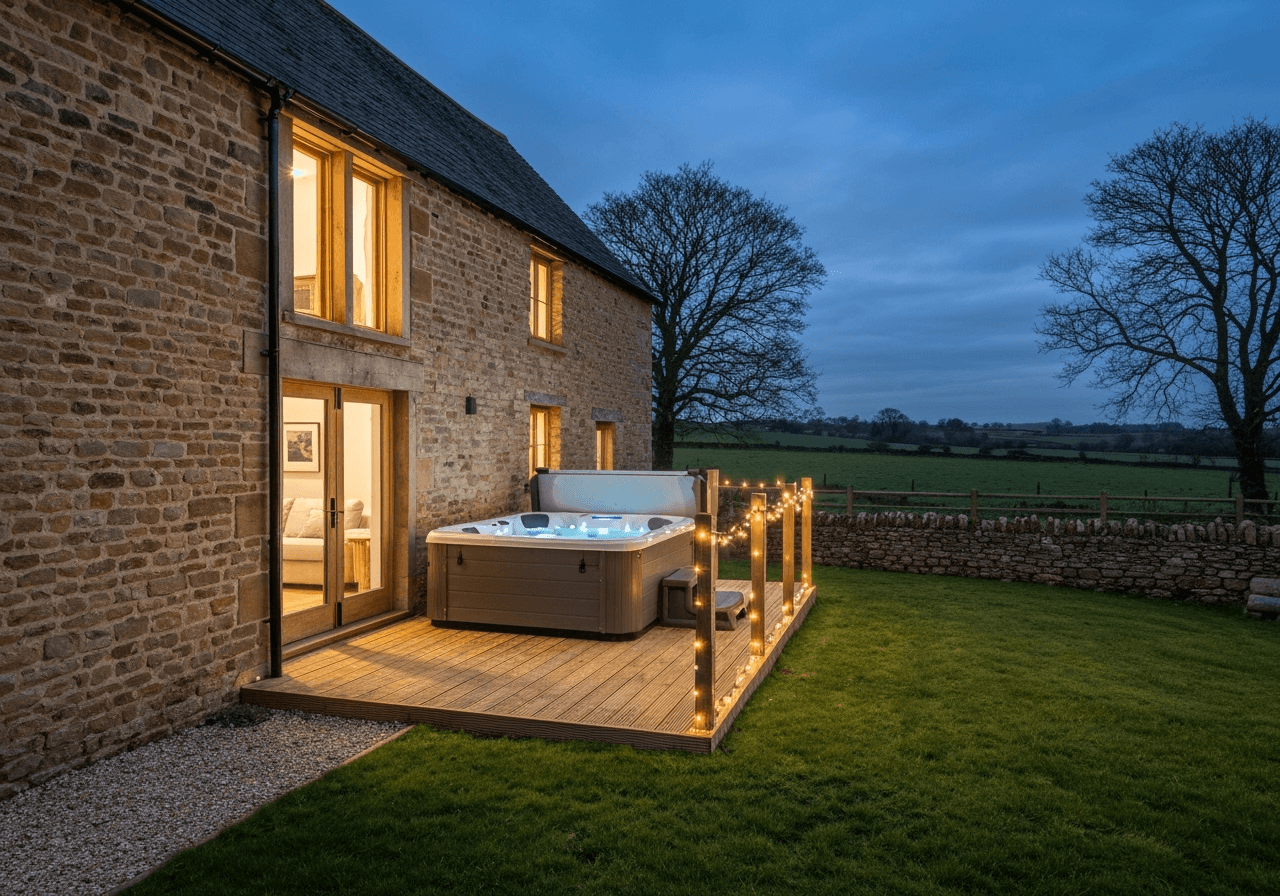
The display itself lasts minutes; the weekend around it is what people remember. Bonfire food is deliberately simple and forgiving of a group standing around outside: jacket potatoes done in foil in the embers, a big pot of chilli or soup that can sit on a low heat all evening, toffee apples, and mulled wine kept warm on the hob. A private chef can run exactly this kind of relaxed outdoor spread without anyone missing the fireworks to man a stove. Afterwards, when everyone is cold and slightly smoky, a hot tub or a warm games room earns its keep more on this weekend than almost any other — browse special celebrations houses with both if you want the evening to have a proper second half.
What to check with the owner before you book
Beyond the display itself, ask the practical questions early: is there a boot room or somewhere to dry wet coats and muddy boots, is the garden genuinely large enough to keep a fire pit a safe distance from the house, and what does the owner say about noise after dark, given fireworks are the one weekend of the year even tolerant neighbours brace for. Our noise and neighbour considerations guide covers how to keep a Bonfire Night weekend on the right side of a good relationship with whoever lives next door. If the weather turns before or after the display, our rainy-day group house guide is worth reading too — early November is rarely dry for a whole weekend.
My honest tip
Decide whether you want your own display or a walk-in to a public one before you start house-hunting — it changes what you are looking for. If you are going private, book the fireworks supplier in the same week you book the house, not after; I have seen more than one group secure a beautiful field and then discover every reputable supplier within an hour was already booked for the 5th. And whatever you do, put the fire pit and any display well clear of parked cars — it is the one piece of Bonfire Night admin nobody thinks about until someone’s bonnet is covered in ash.
Frequently Asked Questions
When should we book a house for Bonfire Night?
Can we run our own fireworks display at a group house?
What food works well for a Bonfire Night weekend?
Should we base ourselves near a public display or run our own?
What should we check with the owner before booking for Bonfire Night?
Share this post