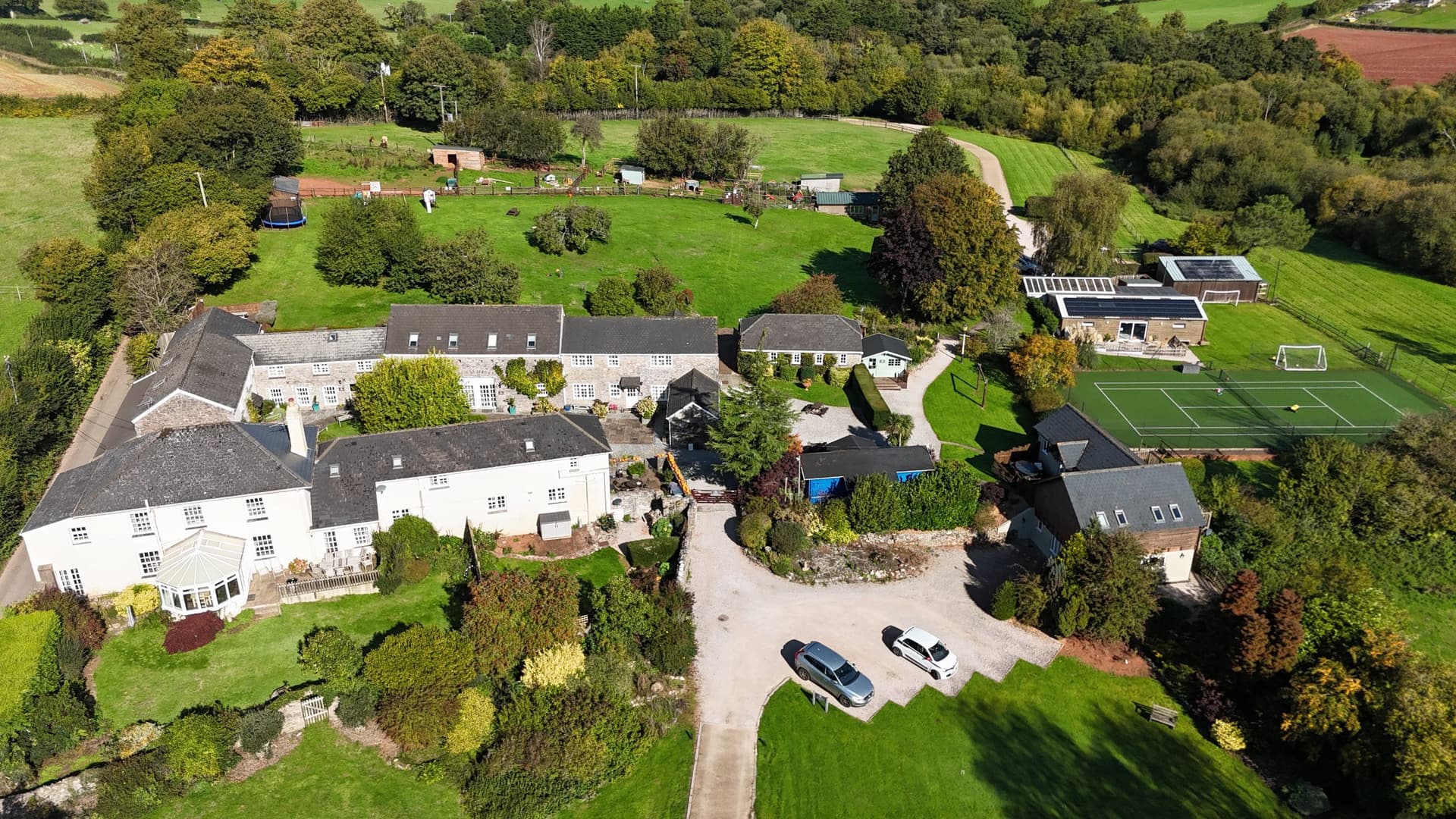
Ask any owner what causes the most last-minute phone calls on a Friday afternoon and parking is near the top of the list, just behind “where’s the key.” A group of twenty people rarely travels as one car; it’s six or seven vehicles arriving at different times from different directions, and a driveway that looked generous in the photographs can turn out to hold four cars comfortably and eight badly. It’s one of the least glamorous things to check before you book, and one of the most likely to actually go wrong.
Why parking catches groups out more than almost anything else
Property listings are built to sell the house, not the driveway, so parking is often described in a single line — “ample parking” or “parking for several cars” — that tells you almost nothing about the actual number. A large country house with sweeping grounds can still have a narrow gravel drive that only takes four or five cars before the rest are parking on verges or blocking a farm gate. Get a real number from the owner rather than trusting the adjective.
Ask the owner this before you assume
Ask specifically how many cars the property can take on-site, whether that number changes if any vehicles are large (people carriers, campervans, a trailer for equipment), and whether there’s a hard limit set by a neighbour, a shared lane, or a local parking restriction rather than the space itself. In rural locations especially, a narrow lane shared with a working farm or other houses can mean the practical limit is lower than the space alone would suggest. Our questions to ask before booking guide covers this alongside the other details worth confirming early.
Staggering arrivals so nobody’s stuck outside
If the group is genuinely bringing more cars than the property can hold at once, agree a rough arrival order in advance rather than letting everyone turn up between 3 and 4pm and improvise. Whoever is first can move a car into an overflow spot once others have unpacked, and it helps enormously if one person — usually whoever is first to arrive — is designated to greet the owner or collect keys and brief everyone else as they show up, rather than the owner repeating the same instructions six times over an afternoon.
Getting bags, food and equipment in without chaos
A group weekend usually arrives with more than luggage — a car full of food shop for the whole house, drinks, decorations, sometimes equipment for a planned activity. Where the property allows it, a short unload-then-move routine works well: pull up close to the door, get everything out, then move the car to its actual parking spot rather than leaving it blocking access while you unpack at leisure. This matters even more if other guests are arriving behind you and the access is a single-track lane.
Overflow parking and what it actually means
“Overflow parking available” can mean anything from a proper gravel area to a grass verge that turns to mud after a wet week. Ask what it actually is, whether it’s within the property boundary or on a public verge, and whether it’s usable in bad weather — a field that’s fine in July can be unusable by November. If your group is planning a Bonfire Night, Halloween or Christmas weekend with wetter ground likely, this is worth asking about specifically rather than assuming the summer photographs still apply.
The short version
Get an actual number for on-site parking rather than trusting a vague description, and ask about access lanes and overflow space separately. If the group has more cars than the driveway can comfortably hold, agree a staggered arrival order in advance so nobody is stuck outside a gate waiting for someone else to move. Because every enquiry here goes straight to the owner, this is one of the easiest questions to get a precise answer to before you book — ask it in the same message as your first enquiry. Our large house booking checklist covers the rest of what to confirm alongside it.