
Nearly a third of UK adults live with a dog — the PDSA’s 2025 Animal Wellbeing (PAW) Report puts it at 30%, around 11.1 million pet dogs. Gather sixteen people for a weekend and the odds are that several of them would rather bring the dog than pay a kennel and worry. The good news is that large houses are often better at this than hotels ever were: at the time of writing, roughly two-thirds of the houses listed on this site welcome dogs in some form. The catch is in the phrase in some form. This guide is about closing the gap between “dog-friendly” on a listing and a weekend that actually works for the dogs, the owner and the guests who did not sign up for a wet spaniel on their pillow.
What 33 group houses actually say about dogs
Everyone in this trade writes that “most” large houses take dogs. We counted instead. Below is every house live on this site on 4 September 2026, sorted by what the owner commits to in writing rather than by the label on the search filter.
| What the owner states | Houses | Share |
|---|---|---|
| Dogs welcome, stated outright | 13 | 39% |
| Dogs by arrangement — describe yours and ask | 9 | 27% |
| No pets | 9 | 27% |
| Silent on pets — you have to ask | 2 | 6% |
Two in three houses (22 of 33) will take a dog in some form. Only 13 say so without a conversation first, and nine say no outright — which is why filtering for “dog-friendly” and stopping there quietly hides a quarter of the houses that would have said yes if you had asked.
The more useful question is what the dog-accepting houses actually give you. A dog changes which rooms matter: a garden that holds a dog without a lead, a bedroom you can reach without carrying an elderly labrador upstairs, a kitchen floor you are allowed to have wet paws on.
| Feature | Houses (of 22) | Share |
|---|---|---|
| Enclosed garden or grounds | 21 | 95% |
| Large kitchen | 17 | 77% |
| Ground-floor bedroom | 15 | 68% |
| Sleeps 20 or more | 14 | 64% |
| Games room | 10 | 45% |
| Hot tub | 10 | 45% |
| Step-free or wheelchair-accessible entry | 7 | 32% |
One finding worth planning around: taking the dog does not cost more. The median advertised weekend total across the 22 dog-accepting houses is £2,100; across the houses that do not take dogs it is £2,250. (Both medians exclude one listing whose advertised weekend total is clearly a nightly rate.) Dog-accepting houses on the site sleep between 4 and 56, with a median of 24. So the trade-off people brace for — pay a premium or leave the dog — is not visible in these prices at all. What you do trade is choice: you are picking from 22 houses instead of 33.
“Dog-friendly” means six different things
There is no standard behind the label. One owner means two well-behaved dogs, downstairs only, with a small charge for the extra clean. Another means bring them all and let them run in the paddock. A third means “by arrangement”, which is an invitation to describe your dogs and be judged on the answer — and that is fair enough, because it is their house. The listing tells you dogs are not banned; it rarely tells you the rules. So the first job, before anyone falls in love with a photograph, is to write down what your party actually needs: how many dogs, whether any are large or young, whether anyone needs them in their bedroom, and whether you plan to leave them while you go out. Five minutes of honesty turns a vague enquiry into a question an owner can answer in one reply.
The four questions that actually matter
Ask how many dogs are permitted, and whether that is a firm number or a starting point. Ask whether there is a charge, and whether it is per dog, per night or per stay. Ask where dogs may and may not go — bedrooms, sofas, upstairs at all — because “downstairs only” is the single most common rule and the single most commonly broken one. And ask whether dogs may be left unattended, because a group that wants a long Saturday lunch out needs to know now, not on Saturday. Put the answers in the same written summary you send back before paying the deposit; our deposits and house rules guide explains why that one email prevents almost every argument later.
The garden honesty test
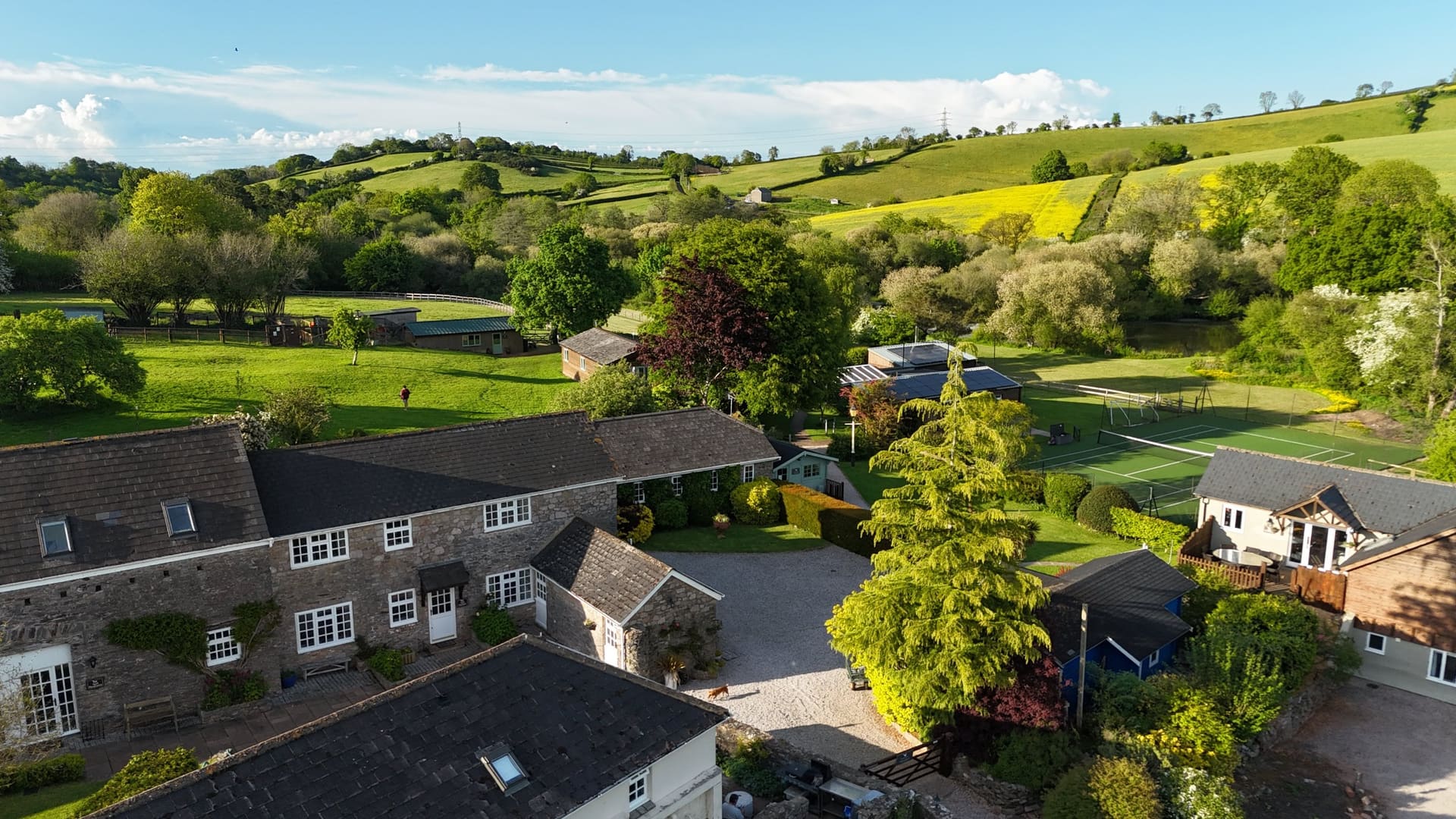
“Enclosed garden” is doing a lot of work on a great many listings. Ask the owner to describe the boundary rather than the view: is it a stock fence with a gate that latches, or a hedge with gaps a terrier could stroll through? What is on the other side — a lane, a field of sheep, a river? Howgills Barn near Sedbergh sits in around five acres of Cumbrian countryside, which is glorious, and also exactly the kind of place where you want to know where the fence line is before you let a dog off the lead. The same applies to farms. Village Farm Holiday Barns in the Cotswolds has resident farm animals, which is a delight for children and a live test of your recall training. Neither is a problem. Both are things to know.
Beds, sofas and the deposit
Most houses that welcome dogs still ask that they stay off the furniture and out of the bedrooms, and this is where dog-friendly weekends lose their deposits — not through damage, but through hair on a cream sofa and a muddy duvet that costs the owner a specialist clean. Bring your own dog beds. Bring two or three old throws and put them over whichever sofa the dogs will gravitate to anyway. Agree the rule with the whole party before arrival, because the person who lets the dog up “just this once” is never the person who paid the deposit. A boot room or utility area matters more than it sounds: Model Farm in Somerset has two kitchens and four acres, and the practical value of a place to hose a dog down before it reaches the hall is hard to overstate in a British February.
How many dogs, and whose
A group of twenty people can arrive with six dogs without anyone having quite decided that. Count them across the whole party before you enquire, then ask the owner about that number specifically. Two dogs is common; six is a different conversation, and an honest one is better than a surprise on the drive. It also affects the house you choose. Where dogs are in the mix, individual beds and en-suite rooms make the sleeping arrangements simpler than a house of big doubles. Broad Park in Rock, North Cornwall, sleeps eleven in eleven individual beds across six bedrooms, which is unusually flexible for a mixed party. The Farmhouse at Bosinver sits on a thirty-acre Cornish farm, so the morning walk starts at the back door rather than the car.
Where dogs make the weekend better
The best dog-friendly weekends are the ones where the dog is a reason to go somewhere rather than a logistics problem to be managed. Coast paths and open country from the door do that. Pembrokeshire is the obvious case — 186 miles of National Trail along Britain’s only coastal national park — and Trebrowen at Angle welcomes dogs, sleeps 24 and has the coast path within reach; our Pembrokeshire and West Wales guide covers the practicalities of getting a big group there. Glyngynwydd near Llanidloes in Mid Wales stands in twelve acres amid hills, lakes and rivers. Cornwall works beautifully outside the summer months, when most beach dog bans lift. Browse our dog-friendly group houses for the current list, and check each listing’s own terms — the policy is the owner’s, not ours.
The other guests
Not everyone in a group of sixteen wants to share a sofa with a wet labrador, and pretending otherwise is how a good weekend gets a bad edge. Settle it before you book: where the dogs sleep, whether they come to dinner, who walks them and when. A house with a room that can be closed off — a snug, a second sitting room — gives the dog-free contingent somewhere to be without anyone feeling exiled. If your party includes older relatives or young children, our multi-generational family holiday guide covers how to shape the house around everyone at once, dogs included.
The short version
Count the dogs first. Ask four questions — how many, what it costs, where they may go, whether they can be left — and get the answers in writing. Test the garden boundary, not the garden photograph. Bring beds and throws, and agree the furniture rule with everyone. Choose somewhere the dog is a reason to go, not a problem to solve. Because every enquiry here goes straight to the owner, each of those questions is one direct message away from a reliable answer — start with our dog-friendly group houses, and keep this page open while you read the terms.
How we compiled the figures in this guide
The house figures above are our own count, not an industry estimate. On 4 September 2026 we read every one of the 33 houses then live on Group Escape Houses and recorded what each owner states in their own listing — the pet policy, the facilities and the published weekend price for the whole house. Where an owner has not stated something, we have counted it as not stated rather than assuming it. Prices are the owner’s advertised weekend total for exclusive use of the house, before any experiences are added.
It is a small sample and we say so plainly: 33 houses is not a national survey, and a bigger site would produce different percentages. What it is, though, is the exact set of houses you are choosing from on this page, counted on a stated date rather than described in round numbers. We recount it when the figures move. External statistics are attributed in the text and linked to the original source, and nothing here is modelled, projected or estimated.
Sources
- PDSA Animal Wellbeing (PAW) Report 2025 — UK dog ownership and population
- Pembrokeshire Coast Path National Trail — route length and access
Last checked 4 September 2026. House figures are our own count of live listings on that date, as described above.