
Pembrokeshire has the coastline people cross the country for and roughly none of the traffic. It has been a National Park since 1952 — the only one in Britain that is predominantly coast — and its 186-mile coast path, opened in 1970, is the most celebrated stretch of the 870-mile Wales Coast Path that has followed the whole Welsh shoreline since 2012. For a large group it offers what Cornwall and Devon offer, with fewer people on the sand and a very different feel to the drive. This guide covers getting a big party there, the houses and where they sit, the seasons, and how the rest of West Wales fits around it.
The only coastal national park
Most national parks are about height; this one is about edge. The park runs almost the entire Pembrokeshire coast from the Teifi estuary in the north to Amroth in the south, with beaches that change character every few miles — the wide sands of Broad Haven and Whitesands, the sheltered curve of Barafundle, the small harbour at Porthgain with its converted-boathouse pub. Tenby, the walled medieval town, is the practical hub in the south with its harbour pubs; St Davids, the smallest city in Britain, anchors the north. Because the coast path threads the whole way, a group walk of any length can start and finish wherever the house is, which matters more than it sounds when twenty people have different ideas about how far “a walk” is.
Getting a large group to West Wales
Be honest about the drive. The M4 ends at Pont Abraham beyond Swansea and the A48 and A40 carry you on through Carmarthen to Haverfordwest; from London allow four to five hours, from Birmingham around three and a half, from Manchester about four. That is longer than Devon for most of England and it is the trade you make for the emptier coast. Trains run to Haverfordwest, Pembroke and Tenby via Swansea — roughly three and a half to four hours from London Paddington — which is realistic for a handful of guests without cars, but a whole party with luggage and the weekend’s food wants vehicles. Plan the shop for Haverfordwest or Carmarthen on the way in rather than hoping the village has what twenty people need for three days; our meals and catering guide covers the big-shop logistics for exactly this kind of trip.
The houses, and where they sit
Here is the honest scale of what we can offer in Wales, rather than a claim about coverage. Four of the 33 houses live on this site on 4 September 2026 are Welsh — two in Pembrokeshire itself, one on the Gwynedd coast and one in Mid Wales. The per-guest column is the owner’s advertised weekend total for the whole house divided by the number it sleeps, which is the figure your group will actually argue about.
| House | Where | Sleeps | Weekend, whole house | Per guest | Dogs |
|---|---|---|---|---|---|
| Trebrowen | Angle, Pembrokeshire | 24 | £4,400 | £183 | Yes |
| Penty Parc | Clarbeston Road, Pembrokeshire | 17 | £2,100 | £124 | By arrangement |
| Ty Gwyn | Llwyngwril, Gwynedd | 30 | £4,800 | £160 | No |
| Glyngynwydd Cottages | Llanidloes, Powys | 33 | £3,000 | £91 | Yes |
Weekend prices are the owner’s advertised total for exclusive use of the house, before experiences. Per guest is that total divided by the maximum the house sleeps, for a full house.
Two things stand out when you line them up. The first is that filling the house is what moves the price per head, not the postcode: Glyngynwydd at £91 a guest and Trebrowen at £183 are both reasonable weekends, and the difference is mostly how many beds you fill. The second is that the two houses with real indoor provision — Trebrowen and Ty Gwyn each carry four indoor anchors between games room, pool table, table tennis and cinema room — are the two on the coast, where you most need a plan for a wet Saturday. That is not a coincidence; coastal owners have learned what West Wales weather does to an itinerary.
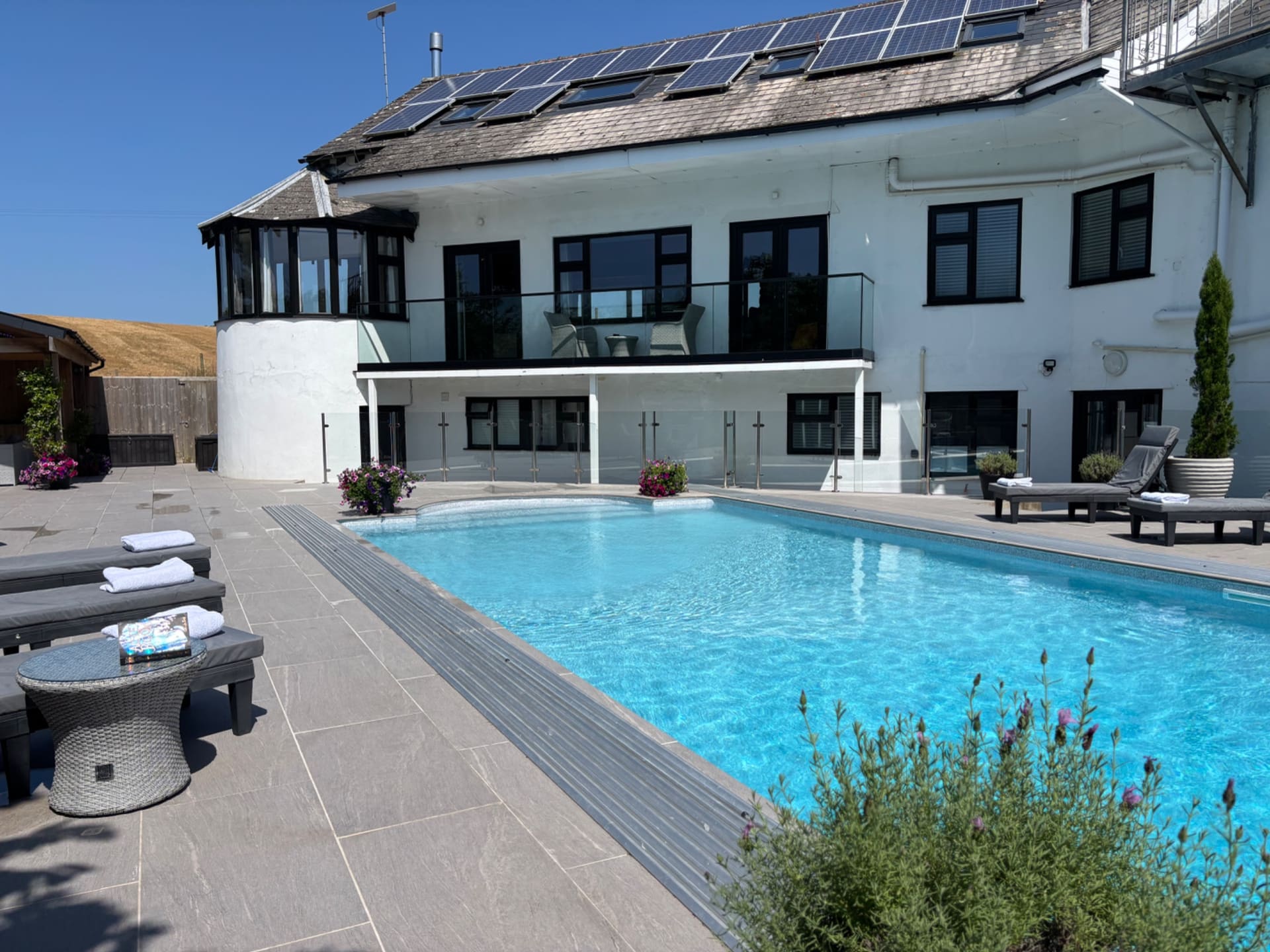
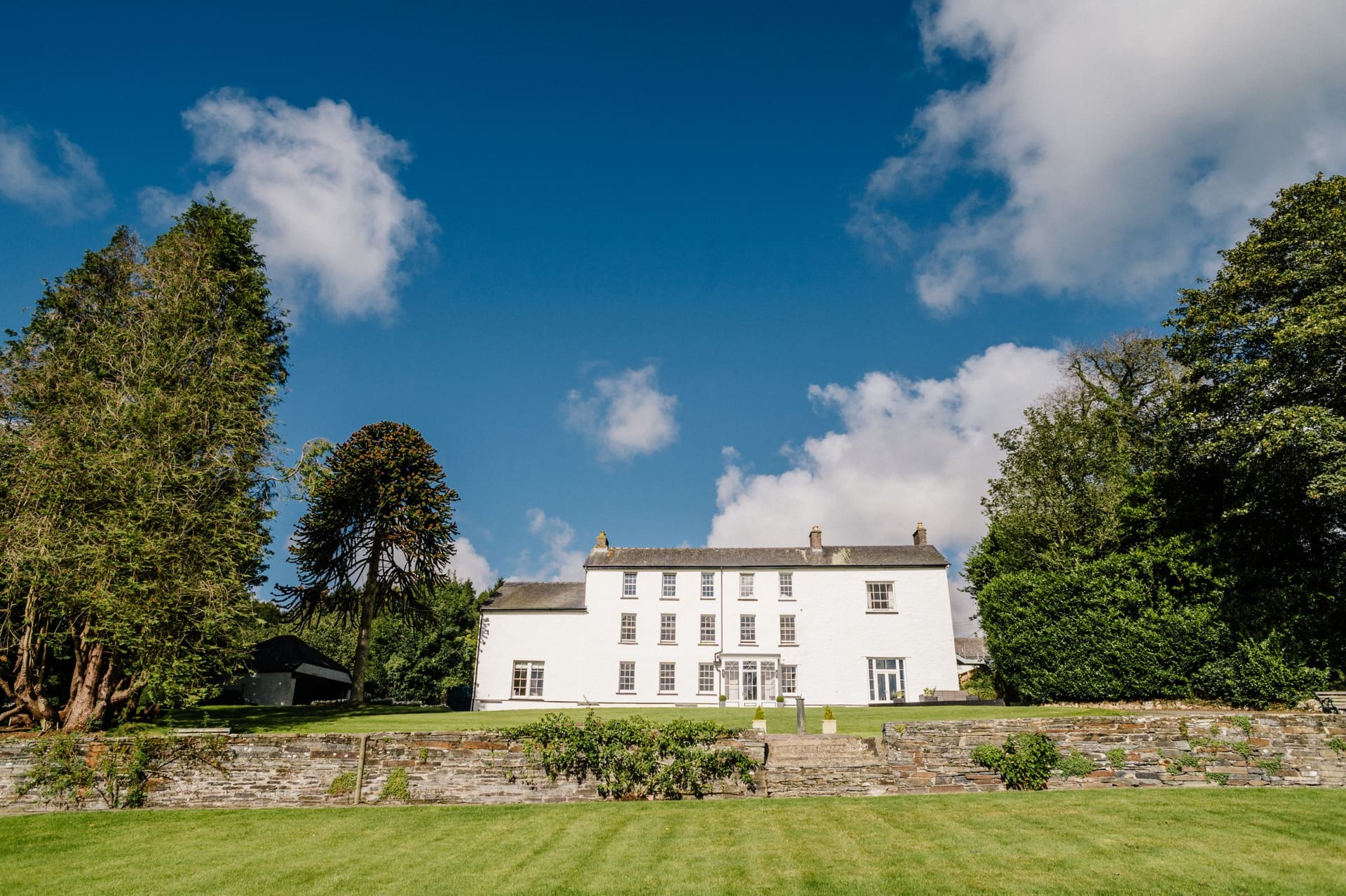
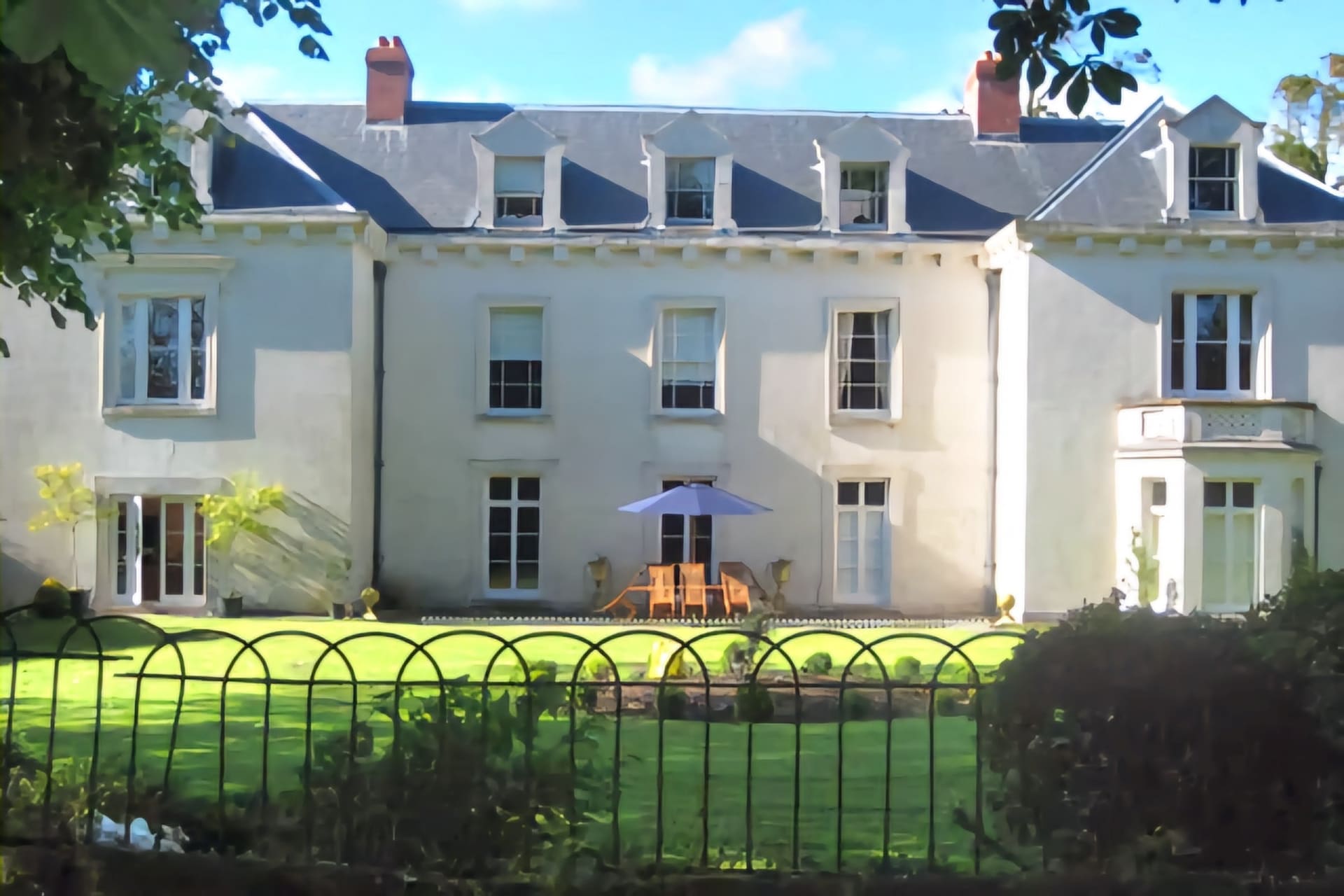
“Pembrokeshire” on a listing can mean the clifftop or a farm twenty minutes inland, and both are good for different groups. Trebrowen at Angle, near the mouth of Milford Haven, sleeps 24 across ten bedrooms with a heated outdoor pool, a hot tub and a games room — the combination you want on a coast where the weather turns in an hour — and it welcomes dogs. Penty Parc is a Grade II listed house near Haverfordwest in rural Pembrokeshire, sleeping 17, with gardens and countryside views and the beaches a short drive in most directions; pets are by arrangement there. The Pembrokeshire destination page carries the current listings. As with any coast, read what “sea view” and “beach access” actually mean on each listing — a five-minute stroll and a steep path with steps are both described that way — and our questions-to-ask guide lists the rest of what to confirm before a deposit.
Skomer, seals and the wild bits
The wildlife here is a reason to come rather than a footnote. Skomer Island, off the western tip of the county, is one of the great seabird colonies in the UK; the Wildlife Trust of South and West Wales counted a record 52,019 puffins there in its 2026 census, up from 43,626 the year before. Boats leave from Martin’s Haven roughly April to July and landing numbers are limited each day, so for a group it is a book-ahead set-piece rather than a spontaneous outing. Grey seals pup on the beaches in autumn, and coasteering — a sport invented on this coast — and sea kayaking are run by local operators for groups of all abilities. One of these, placed before dinner, is the shape of a good Pembrokeshire day; our activities and entertainment guide explains why one set-piece beats three.
Seasons on the coast
May to September gives you the beaches and the sea at their best, and the towns at their busiest, though “busy” here is relative. April brings the coast path into flower and the puffins back to Skomer. Autumn empties the beaches, fills the seas and suits a house with a hot tub better than a house built around a barbecue. Winter is genuinely wild and genuinely quiet — wonderful for a group that wants the drama and a games room, less so for one that came for the sand. The west of Wales is wetter than the south-west of England on the Met Office’s 1991–2020 averages, which is not a reason to avoid it but is a reason to apply the rainy-day test to any house you shortlist: our rainy-day group house guide sets out what to check.
Beyond Pembrokeshire: the Snowdonia coast and Mid Wales
West Wales does not stop at the county line. Two hours north, Ty Gwyn at Llwyngwril sits on the Cardigan Bay coast looking out over the sea and the mountains of Snowdonia at once, sleeping 30 with a hot tub, games room and cinema room — the sensible kit for a stretch where Met Office averages put the old county of Merionethshire at 1,914 mm of rain a year and the mountain sites well above four metres. Inland, Glyngynwydd near Llanidloes stands in twelve acres of Mid Wales valley among hills, lakes and rivers, sleeping 33 across sixteen bedrooms with dogs welcome and a wedding barn on site. Neither is Pembrokeshire, and neither is trying to be: they are the answer for a group that wants Wales without the drive to its furthest corner, or that wants mountains with the sea. Our Wales region page and Snowdonia destination page carry the live listings for each.
Structuring a West Wales weekend
Arrive Friday with the big shop done and do nothing organised beyond dinner; the drive has earned it. Saturday, one set-piece — the coast path from the door, a Skomer boat, a coasteering session — placed so everyone is back and showered before the evening, which is when a private chef arriving at the house repays the cost of the whole weekend in not having to find a restaurant for twenty in a small harbour town. Sunday is the beach if the weather allows and the games room if it does not, then the long drive home with the sea behind you. For the dog contingent, our dog-friendly group house guide covers the questions to settle first; for the rest, browse the houses and start with the coast.
How we compiled the figures in this guide
The house figures above are our own count, not an industry estimate. On 4 September 2026 we read every one of the 33 houses then live on Group Escape Houses and recorded what each owner states in their own listing — the pet policy, the facilities and the published weekend price for the whole house. Where an owner has not stated something, we have counted it as not stated rather than assuming it. Prices are the owner’s advertised weekend total for exclusive use of the house, before any experiences are added.
It is a small sample and we say so plainly: 33 houses is not a national survey, and a bigger site would produce different percentages. What it is, though, is the exact set of houses you are choosing from on this page, counted on a stated date rather than described in round numbers. We recount it when the figures move. External statistics are attributed in the text and linked to the original source, and nothing here is modelled, projected or estimated.
Sources
- Pembrokeshire Coast National Park Authority — designation and park information
- Pembrokeshire Coast Path National Trail — 186 miles, opened 1970
- Wales Coast Path — 870 miles, opened 2012
- Wildlife Trust of South and West Wales — Skomer and Skokholm islands
- Met Office UK climate averages, 1991–2020
Last checked 4 September 2026. House figures are our own count of live listings on that date, as described above.