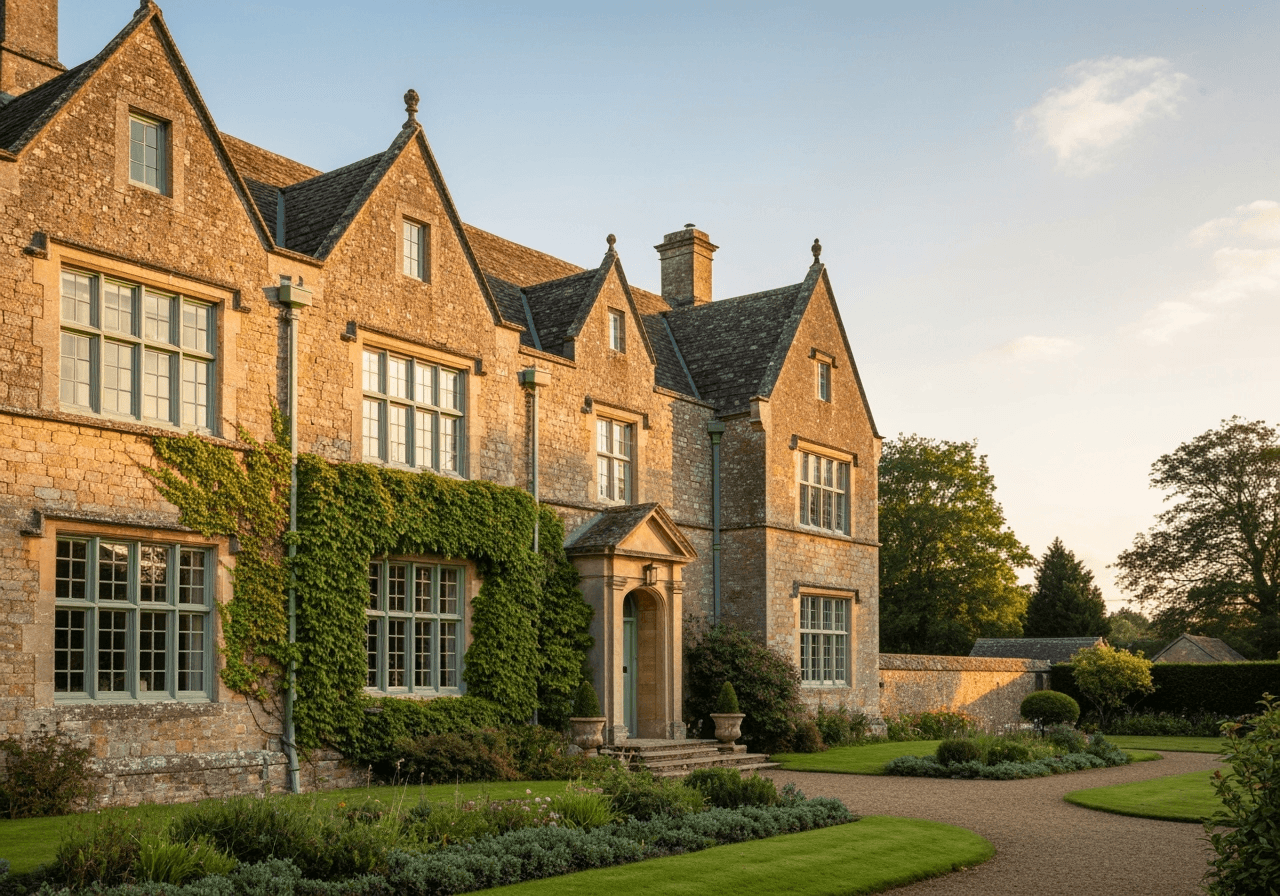
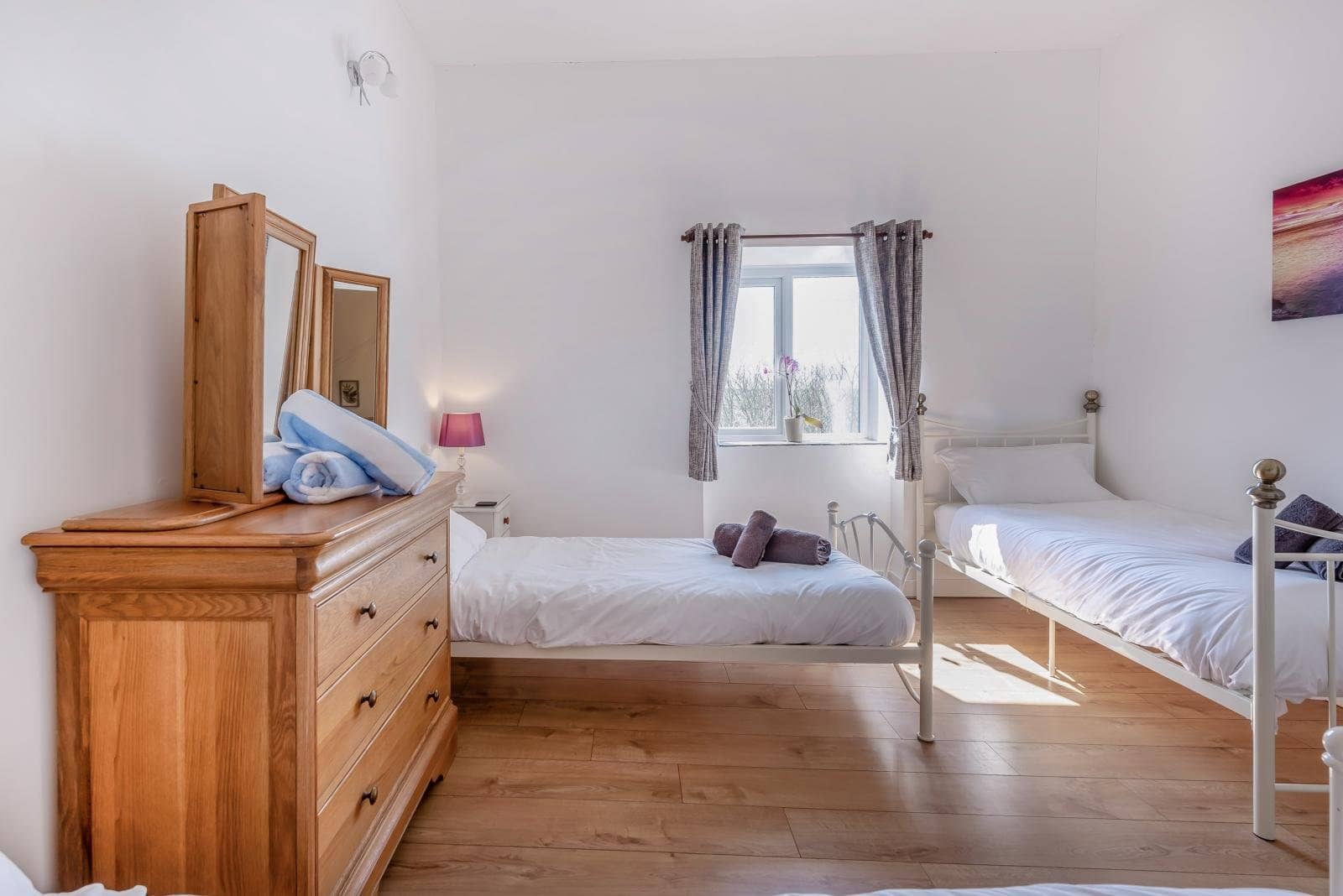
A house that sleeps 24 can have six bedrooms or fifteen, and that one headline number hides most of what decides whether a group weekend is comfortable. How to read the bedrooms and bathrooms on a listing, what the numbers across this site actually look like, and how to share the rooms out without anyone falling out.
What “sleeps” really means
The sleeps figure on a listing is almost always a maximum: every bed filled, including bunks, sofa beds and any room that only really works for children. That is useful for search filters and not much use for working out whether your particular group fits. Twenty adults who are mostly couples need a very different house from twenty friends happy to share twins, and a family group with small children can often fill a house that would be a squeeze for the same number of grown-ups.
What the numbers look like on this site
We looked at the 43 houses on Group Escape Houses that sleep 18 or more guests:
- Guests per bedroom: the median is 2.6, but it runs from under two to more than five. At the top end, most beds are in shared rooms.
- Bedrooms in houses sleeping 24 to 30: anywhere from 6 to 15 across the 17 houses in that band.
- Guests per bathroom: the median is about 3.5, with a range from under two to more than eleven.
- Dining: of the 37 that state a dining capacity, 12 seat fewer people than they sleep.
- Floor plans: only 2 of the 43 show a floor plan on the listing, so you will usually need to ask for one.
Two houses with the same sleeps figure can be completely different weekends. The bedroom count, the bed types and the bathroom count are the numbers to compare, not the headline.
Read the rooms, not the total
Ask the owner for the sleeping arrangements room by room if the listing doesn’t show them. Trebrowen in Pembrokeshire is a good example of what a useful room list looks like: it sleeps 24 across ten bedrooms, and the listing sets out a family room with a king and a single, a triple with three singles, a twin, and two king en-suites on the ground floor. With a list like that you can see straight away who goes where. Things to check in any room list:
- Zip-and-link beds. A super-king that unzips into two singles is the most flexible bed in a group house, because it works for a couple or for two friends.
- Bunks. Fine for children and some adults, not for everyone — ask whether they are adult-sized. Standard UK safety advice is that children under six shouldn’t sleep on a top bunk.
- Sofa beds and put-up beds. Often counted in the sleeps figure. Find out where they are: a sofa bed in the only sitting room means someone goes to bed last every night.
- Rooms you walk through. Interconnecting rooms suit a family and not much else.
Bathrooms: do the morning maths
The bathroom count is the number most groups overlook until the morning it matters. A quick test: multiply the guests per bathroom by the time each person needs. At 3.5 guests per bathroom and fifteen minutes each, the last person in each bathroom starts about 40 minutes after the first. At ten guests per bathroom it is more than two hours — which matters before a wedding, a booked activity or a checkout. A house like Old Great Marlborough House, with ten bathrooms, nine of them en-suite, for 26 guests, makes a getting-ready morning painless. Our checklist for booking 20-plus guests covers the dining table, parking and fridge space alongside the bathrooms.
How to allocate the rooms
- List who is coming and who shares with whom. Couples, friends happy to share, and anyone who needs a room alone.
- Count beds by type. Doubles needed versus twins and singles. This, not the total, decides whether a house fits.
- Place the people with needs first. Anyone who can’t manage stairs needs a ground-floor room — only 8 of the 43 large houses list one, so filter for houses with ground-floor bedrooms early. Parents with a baby want a room near a bathroom; light sleepers want to be away from the kitchen and the hot tub.
- Settle the best room openly. The guest of honour, the organiser or a draw from a hat — any rule works, as long as everyone knows it before arrival.
- Price the rooms fairly. If the rooms differ a lot, split the cost by room rather than by head. Our guide to splitting group holiday costs covers the methods.
- Publish the room list before you travel. Arriving to an agreed list avoids the sprint up the stairs with suitcases.
Children, older guests and mixed groups
Families usually want rooms close together, space for a travel cot and a bathroom that isn’t someone else’s en-suite; our young children safety checklist covers stair gates, travel cots and the rest of the house. Older guests generally want the opposite end of the house from the party. In a mixed group, put the night owls near the games room and the early risers near the kitchen, and everyone gets a better weekend. The multi-generational holiday guide goes into more detail, and our group house etiquette guide covers the house rules that keep a shared stay friendly.
Finding a house that fits
Start with houses by group size to find properties in your range, then compare bedroom and bathroom counts rather than the sleeps figure. Our houses for 20 guests and houses for 30 guests are the most common starting points, and the large cottages and large holiday homes collections are worth browsing if you want something more relaxed than a manor or a castle.
Where these numbers come from
The figures in this guide come from the listings on Group Escape Houses that sleep 18 or more guests, taken on 24 September 2026. Bedrooms, bathrooms, dining capacity and sleeping arrangements are supplied by owners and can change, so always confirm the details for your dates with the owner.
The short version
Look past the headline sleeps figure and compare bedrooms, bed types and bathrooms instead. Ask for the room-by-room list, do the bathroom maths for your busiest morning, give the rooms that need to go to particular people to those people first, and publish the room list before you travel. Every enquiry on this site goes straight to the owner, so ask for the sleeping arrangements and a floor plan in your first message.