
Over more than 20 years of trading and 100,000+ groups, Butlers in the Buff’s booking records say something quietly useful about the British summer: groups over-plan it. Brighton is the most-booked destination in Butlers in the Buff’s booking records with 2,100+ bookings, life drawing rose 149% between 2017 and its 2022 peak in those same records, and the brand now hosts around 120 cocktail classes a year. What the numbers point at is not a fashionable activity. It is a shape: one organised thing, done properly, with the rest of the weekend left loose.
Summer is the season most likely to tempt an organiser into building an itinerary. Long evenings make everything look possible at the planning stage, and then the weekend arrives, the traffic is bad, someone’s train is cancelled, and an eleven o’clock paddleboarding slot becomes the reason nobody enjoys Saturday. What follows is how to build a summer weekend that survives contact with fourteen real people.
The one-big-thing rule
The happiest summer groups book a single anchor: a cocktail masterclass on the Saturday afternoon, a life drawing hour that everybody dreads and then will not stop talking about, or a private chef for one dinner. The British summer does the rest – garden games, a long walk, a barbecue that starts at four and finishes when it finishes.
The reason one anchor beats three is not laziness. It is that every scheduled item in a group weekend carries a cost that stays invisible until you are in it: the twenty minutes of rounding people up, the argument about cars, the person who wanted a slow morning and is now visibly enduring a kayak. One anchor makes you pay that tax once. Three anchors and you have built a coach tour with a hot tub.
Coast, obviously – but pick your coast
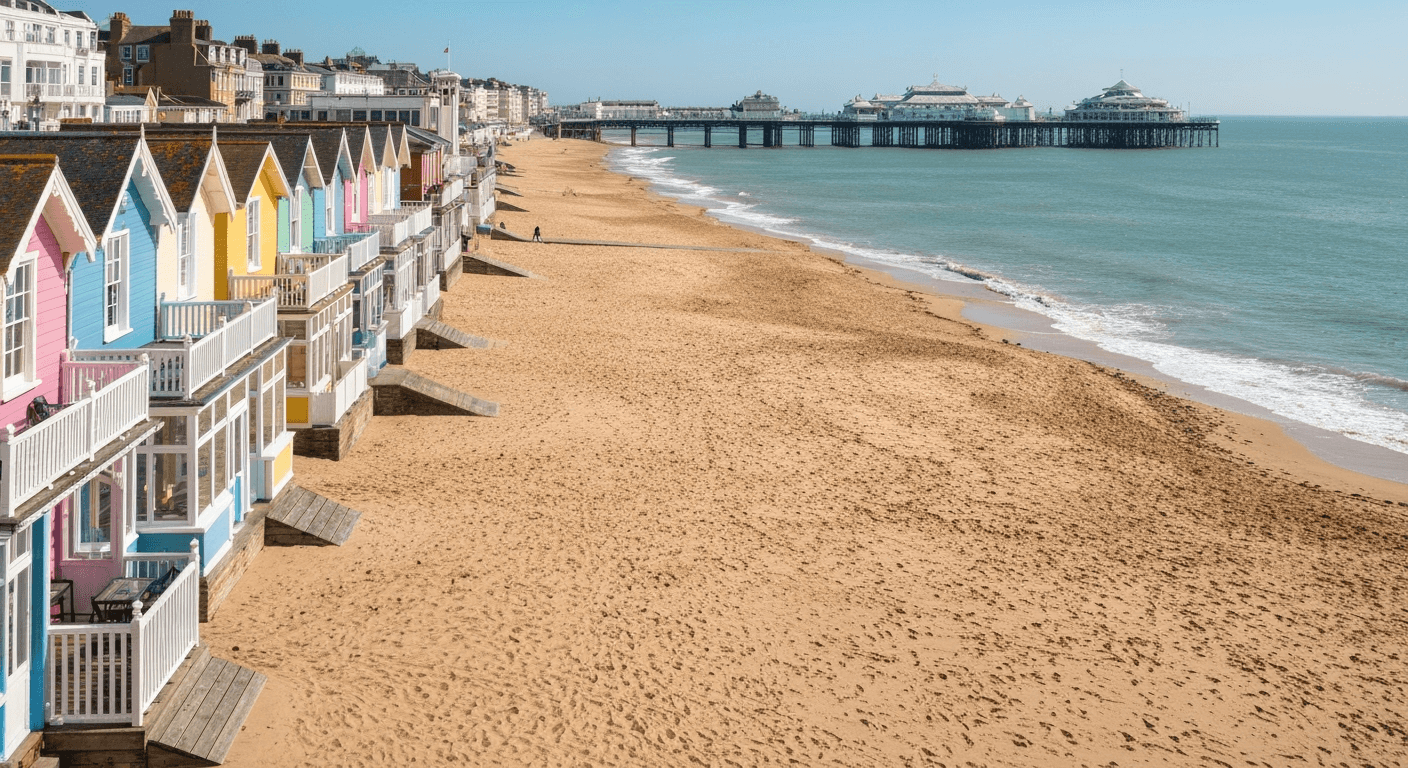
Brighton earned those bookings honestly: beach by day, the Lanes by night, and a mainline station that lets half the group skip the driving entirely. It is the right call when the group is large, mixed and unlikely to agree on anything – a walkable centre means the weekend organises itself and nobody needs a lift.
For a wilder blue, Cornwall trades that convenience for sea swims and barbecue sunsets. Be honest about the drive and the summer traffic when you make the call: a long Friday on the A30 is fine for a group that has taken the Friday off and miserable for one arriving at nine at night. Pembrokeshire offers a comparable coastline from a different direction, which is worth an hour with a map before you commit the group to a region.
Or go up instead of out
Summer is also the safest season to take a mixed-fitness group into the fells: long light, drier paths, and a pub garden at the bottom of most descents. Our Lake District walking weekend guide maps routes that work when half the group runs marathons and half consider the walk to the hot tub sufficient exercise. Snowdonia does a similar job with fewer people on the smaller paths.
The trick with any walking weekend is to plan the split rather than pretend it will not happen. Pick a route with a genuine bail-out point – a village, a car park, a cafe partway round – and say out loud on Friday night that peeling off there is a completely respectable outcome. Groups fracture badly when the split is unplanned and somebody feels they have ruined it for everyone.
Let the house be the activity
The most underrated summer booking decision is outdoor space. A big lawn, a sheltered terrace and a table that seats everyone will carry more hours of your weekend than any paid experience – and it costs nothing once the house is booked. Our round-up of group houses with large gardens is the place to start if the garden is genuinely the point.
Confirm the practicalities in writing before you plan around them, because they vary house by house and are set by each owner: whether a barbecue is provided and who supplies the gas or charcoal, whether fire pits or chimineas are permitted, how many outdoor chairs actually exist, whether there is shade, and what the rules are about music outdoors and the hour it has to stop. A garden you cannot cook in or sit in after nine is a photograph, not a facility.
Booking summer activities for a large group
Suppliers work differently from houses, and the gap catches organisers out. Before you take money from anyone, get four things confirmed by email: the exact headcount the price is based on, what happens if numbers change and by when, whether the session runs at your house or theirs, and what the wet-weather plan is. Deposits, minimum numbers and cancellation terms are set by each supplier, so read them rather than assuming they mirror the house booking.
Time the session for early or mid-afternoon on the Saturday. Afternoon sessions get full attendance; evening ones compete with dinner, drinks and the friend who has discovered the pub. If the activity comes to you, ask what it needs – a cleared table, a kitchen island, floor space, a power socket, parking close to the door – and check that against the house before you book both. Our group house activities and entertainment guide covers what tends to work at which group size.
Weather, and the plan you hope not to use
The British summer will hand you a bad day, and the groups who cope are simply the ones who decided in advance what a bad day looks like. Agree one indoor fallback before you travel: a long lunch somewhere that takes bookings, a cinema room, a games afternoon, a cooking session. Put it in the same message as the main plan, so nobody feels the weekend has collapsed when the rain arrives.
Food is the other half of the contingency. A barbecue with no indoor alternative is a real crisis at six o’clock on a wet Saturday; our group catering ideas cover meals that scale for large numbers and can move indoors without ceremony.
Mixed ages, mixed energy, mixed mobility
Most summer groups contain somebody the default plan does not fit – a grandparent, a toddler, a pregnancy, a knee, a friend who is driving. Ask the owner directly about ground-floor bedrooms, step-free access to the garden and the main living space, and how close parking is to the door. These vary enormously between houses and are rarely spelled out in a listing. Our accessible group accommodation checklist is the list to work through before you pay a deposit.
On the itinerary side the rule is simple: everything opt-in, nothing exclusive. If the anchor is a meal, everyone is in. If the extra is a six-mile walk, the people who stay behind should be staying somewhere they actively want to be – which is the whole argument for choosing a good house over a cheap one.
The timing detail worth getting right
Schedule the organised activity for Saturday afternoon, not Saturday night, and plan your travel around the traffic rather than the timetable in your head. Afternoon sessions get full attendance and the photographs everyone keeps. Evening ones get most of the group but not all of it, and a mild resentment that lasts until Sunday.
Where these numbers come from
The booking figures in this article are our own, not an industry estimate. They come from the booking records of our sister brand Butlers in the Buff, which has been running group celebrations for more than twenty years and has served over 100,000 groups — so they describe what groups actually did, not what a survey says they intended to do. They are counts taken from those records rather than projections, and where we quote a share (for example the split of bookings across the year) it is a share of that whole dataset.
Two honest limits. It is one company’s book, weighted towards hen and stag celebrations, so it describes the celebration market rather than all UK group travel. And it is historical: it tells you how groups have behaved, which is a good guide to how they will behave, not a forecast. Anything from outside our own records is attributed in the sentence it appears in and linked below.
Sources
- Butlers in the Buff booking records — our sister brand’s own bookings, over 100,000 groups across more than 20 years of trading
Figures from our own booking records are counts, not estimates. Third-party figures are quoted as the original report gives them and linked above so you can check them. Last checked 4 September 2026.
Frequently Asked Questions
What are the best summer group activities in the UK?
Can I book outdoor activities for a large group?
Do group houses have barbecue facilities for summer?
What should we do if the weather is bad?
How far ahead should we book a summer group house?
Is the coast or the countryside better for a summer group weekend?
How do we plan a summer weekend for mixed fitness levels?
Should we plan more than one activity a day?
Share this post